Data Center Construction Logistics: How to Keep a Fast-Moving Site on Schedule

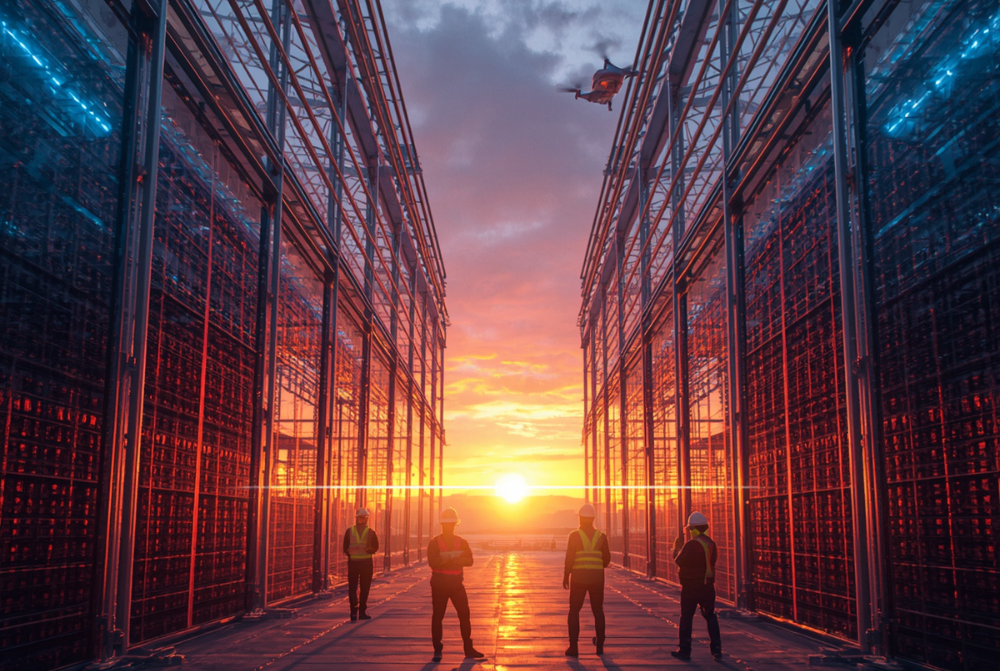
Data center construction logistics means coordinating every delivery, vehicle, subcontractor, and site access point across one of the most demanding build environments in the industry. When it breaks down, such as late deliveries, gate congestion, unannounced trucks, then the whole schedule pays for it.
This article covers what makes data center logistics uniquely complex, what a well-run site actually needs to coordinate, and how purpose-built construction logistics software helps project teams stay in control.
Why Data Center Construction Logistics Is Harder Than Most Builds
Data center projects aren't like standard commercial builds. The scale, speed, and supply chain complexity are in a different category.
A hyperscale data center can involve hundreds of subcontractors, thousands of deliveries, and concurrent trades working across multiple zones simultaneously. Structural steel, mechanical and electrical equipment, cooling infrastructure, cabling, and fit-out materials all hit site at overlapping stages. Each delivery has a specific destination, a specific time window, and a specific crew waiting on it.
When any part of that coordination fails, the cost is immediate. A delayed concrete pour, a generator delivery with no one to receive it, two crane lifts booked at the same time — these aren't minor inconveniences. On a data center build, they translate directly into schedule extensions and cost overruns.
Add to that the security requirements typical of data center clients, the safety obligations around heavy vehicle movements, and the need to keep detailed records for compliance, and it's clear why off-the-shelf tools (spreadsheets, shared calendars, WhatsApp threads) hit a ceiling fast.
What Does a High-Performance Data Center Construction Site Actually Need to Coordinate?
Managing logistics on a data center construction site means keeping control of several moving parts at once:
Delivery scheduling. Subcontractors and suppliers need to book time slots in advance. Without a centralized booking system, you end up with multiple trucks arriving at the same gate at the same time, and no one with a clear picture of what's coming in when.
Vehicle access and tracking. On a large site, knowing where vehicles are, and whether they should be there, matters for both safety and security. Real-time GPS tracking gives site managers visibility over every vehicle movement without relying on radio check-ins.
Driver inductions. Every driver entering a data center construction site needs to be inducted before they set foot on site. That means reviewing online safety briefings, understanding site rules, approved delivery route, and confirming compliance. Doing this on paper creates gaps. Digital inductions before arriving close them.
Exclusion zone management. Active construction zones, crane swing areas, and restricted access areas need to be communicated clearly to every driver and operator on site. Logistics scheduling systems that flag exclusion zones at the point of scheduling prevent conflicts before they happen.
Compliance documentation. Chain of Responsibility (CoR) obligations in some countries mean the site owner and head contractor carry legal exposure for heavy vehicle safety. Maintaining a complete digital record of every delivery route, vehicle entry, driver induction, and delivery gives you the audit trail you need.
How Does Construction Logistics Software Reduce Delays on a Data Center Site?
The core problem with manual logistics management is fragmentation. Deliveries are booked via email. Drivers call ahead instead of following a schedule. Site managers spend half their day firefighting instead of planning.
Construction logistics software like Veyor consolidates all of that into one live platform. Suppliers and subcontractors book their own delivery slots directly. The site team sees every arrival in real time: who's booked, who's on their way, who's on site. Clashes are flagged before they happen, not after the truck is already at the gate.
The result is fewer delays, fewer calls, and a site team that's managing logistics proactively rather than reactively.
For data center builds in particular — where the schedule pressure is intense and the client expectations are high — that shift from reactive to proactive is where the real value shows up.
What Features Matter Most for Data Center Logistics Management?
Not all construction logistics software is built for the complexity of a large data center build. Here's what to look for:
- Supplier self-serve booking — subcontractors and suppliers book their own slots without back-and-forth with the site team
- Real-time GPS vehicle tracking — live visibility over vehicles on and approaching site
- Geofencing — ability to confirm that trucks are using the approved delivery route, with alerting capabilities
- Digital driver inductions — completed before arrival, records stored automatically
- Exclusion zone management — flagged at the booking stage, not discovered on site
- Proof of delivery — digital confirmation when a delivery is complete, with timestamp and location
- Chain of Responsibility support — automated documentation for CoR compliance
- Live site display boards — visible to site staff so everyone sees what's arriving and when
- CO2 tracking — increasingly required by data center clients with sustainability commitments
The best platforms connect all of these into a single workflow — from booking to arrival to completion — without requiring the site team to manage multiple systems.
FAQ: Data Center Construction Logistics
What is construction logistics software?
Construction logistics software manages deliveries, vehicle movements, and site access on construction sites. It replaces manual scheduling — spreadsheets, calls, emails — with a centralized booking system, real-time GPS tracking, and digital driver inductions. The result is better visibility, fewer delays, and a documented record of site activity.
How do you manage high-volume deliveries on a data center site?
High-volume delivery management starts with a centralized booking system that gives every subcontractor and supplier a self-serve portal to schedule their slots. Combine that with GPS tracking and a live site dashboard, and the site team can see exactly what's coming in, when, and whether anything is at risk of clashing.
What's the biggest cause of delays on data center construction sites?
Uncoordinated deliveries are one of the most common causes. When multiple subcontractors book deliveries independently — without visibility into what else is arriving that day — you get gate congestion, waiting time, and missed windows. A centralized booking system with clash detection prevents most of these before they occur.
How does GPS tracking help on large construction sites?
GPS tracking gives site managers real-time visibility over vehicle locations, both on site and approaching the gate. It also supports geofencing for CoR compliance, alerting teams when a driver is not on the approved route. That means you can proactively manage arrivals, redirect vehicles if there's a conflict, and maintain a complete record of every movement for compliance purposes.
Can construction logistics software help with safety compliance?
Yes. Purpose-built platforms like Veyor handle digital driver inductions, exclusion zone flagging, Chain of Responsibility documentation, and vehicle access control — all in one system. That reduces the manual compliance burden and ensures nothing falls through the gaps.
See how Veyor works on large-scale construction sites. [Book a demo →]
.avif)




Get the latest insights into your inbox