Why Most Building Security Incidents Start at the Loading Dock — And What Actually Closes the Gap


Loading dock access control is the front line of building security, and the data says most owners are losing that fight. Across the US, Canada, Australia, and Asia-Pacific, facilities and loading docks — not trucks on the open road — are where cargo crime concentrates. And increasingly, the way in isn't a break-in. Increasingly, the vehicle at the gate may appear legitimate while being unexpected, unauthorized, or connected to fraudulent activity.
That shift matters, because it reframes dock security as an access-control and documentation problem software can solve — not just a fences-and-cameras problem. This piece covers what the data shows, and what actually closes the gap: not scheduling alone, but verifying every vehicle that reaches the gate, booked or not.
How Much Does Loading Dock Crime Cost Building Owners?
In the US, warehouses and facilities accounted for 41% of cargo theft incidents in 2025, and total losses hit roughly $725 million — up 60% year over year, according to CargoNet/Verisk. In Canada, the Équité Association reports Ontario alone accounts for 83% of national cargo theft incidents, with more than $531 million stolen since 2019 and roughly $239 million of that never recovered.
Per the Safe Work Australia's 2025 report, transportation and warehousing account for the highest number of fatalities by industry. Across APAC, including Singapore and Malaysia, TAPA APAC recorded 488 cargo crime incidents and more than $30 million in direct losses in 2025, with facilities and vehicles together accounting for nearly half of all cases.
What Causes Loading Dock Security Incidents?
In APAC, straightforward intrusion is still the dominant tactic, at 39.3% of incidents per TAPA. But in North America, "strategic theft" — fraud, forged documents, fake carriers — is up 1,475% since 2022, according to Travelers and CargoNet. The mechanism is shifting from forcing a way in to talking a way in.
Two cases make the shift concrete. In April 2023, thieves pulled off a CAD $20 million gold and cash heist at Toronto Pearson Airport using a forged air waybill and, investigators later found, help from insiders, so no break-in required. In July 2025, a trailer carrying roughly $15 million in Apple products and semiconductors, managed by Ceva Logistics, was stolen from an unsecured yard in Reno, Nevada, after the load had been outsourced to an unvetted motor carrier. This was one of eight similar incidents Ceva faced that year, together worth more than $18 million.
Neither case was a fence cut in the dead of night. Both were a vehicle or shipment moving through a checkpoint that had no way to verify it against what should have been there. That's a verification gap, not a lock-and-camera gap. This lines up with a broader pattern across Asia, where over a quarter of recorded cargo thefts are linked to employees or drivers. Access control has to cover who's supposed to be there, not just who forces their way in.
How Does Poor Dock Access Control Create Safety Risk, Not Just Theft Risk?
The same condition that enables theft enables injury: uncontrolled dock traffic. Unscheduled trucks, no consistent check-in, vehicles and pedestrians moving through the same space without a clear system. That's the environment where forklift-pedestrian incidents, falls, and crush injuries cluster at the dock. It's also the environment Safe Work Australia's fatality data reflects, with transport and warehousing outpacing every other industry in 2024.
For a risk and insurance audience, that's a useful reframe: dock access control isn't a security line item and a safety line item running on separate budgets. It's one operational problem. Who and what is moving through the dock, and whether anyone is tracking it, with two different kinds of cost attached.
What Does Effective Loading Dock Risk Management Look Like?
The controls that matter most are the ones that verify every vehicle, not just the ones with an appointment: vehicle checks at arrival, a booking layer that sets expectations before a vehicle reaches the property, and — the piece missing from most setups — real-time verification against bookings, trusted lists, and restricted lists for every vehicle that shows up, scheduled or not.
That's what Veyor Vehicle Access Control does. It reads the plate the moment a vehicle approaches, checks it against bookings, trusted lists, and restricted lists in real time, and takes the right action automatically: approved vehicles get access. Flagged or unrecognized ones trigger a security alert or a hold. Every event is logged with a timestamp, plate image, booking reference, and outcome, so the record exists whether or not anyone was watching at the time.
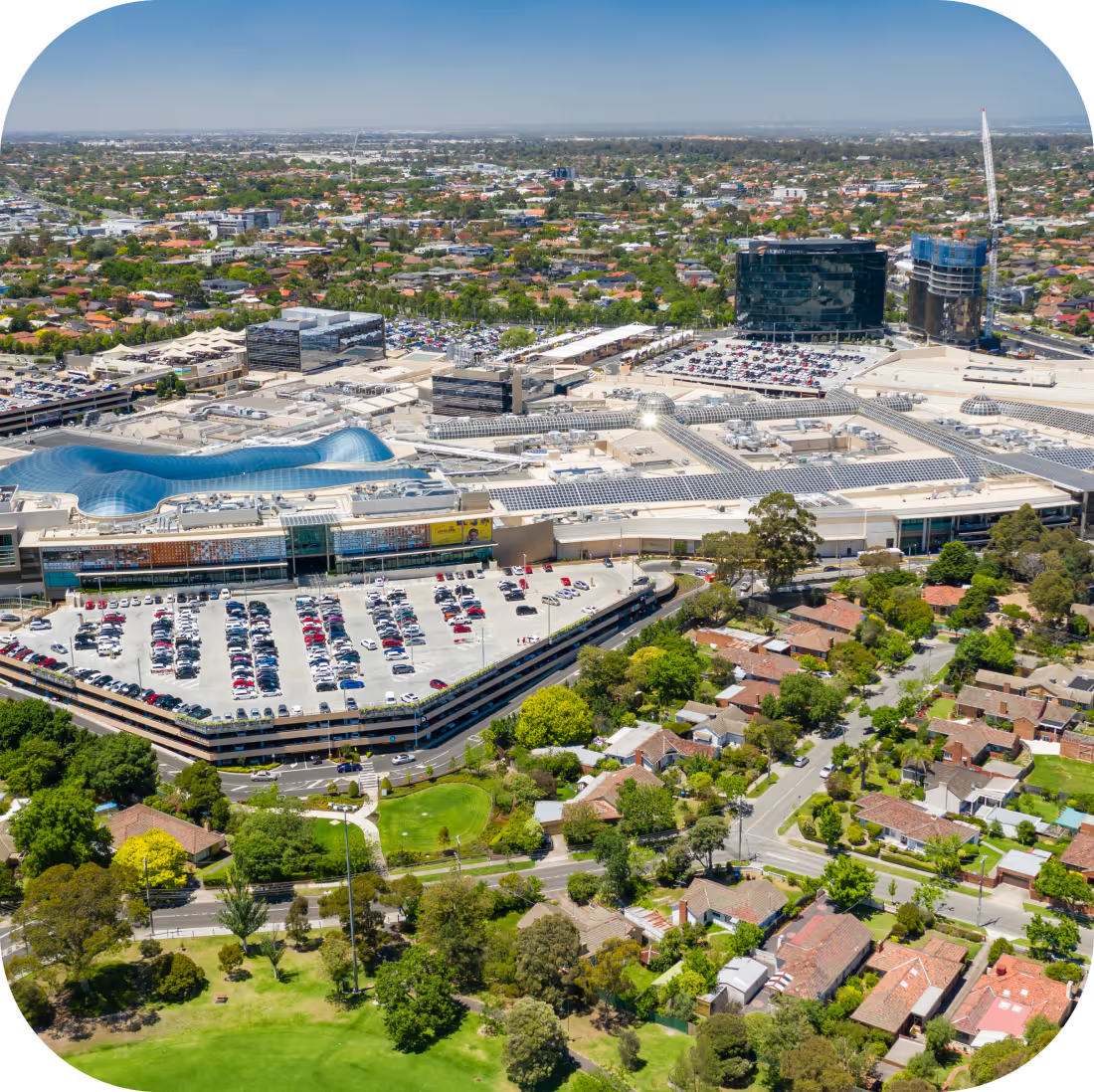
At Melbourne Central, a 51-story GPT Group office tower and retail center managing roughly 150 vehicles a day through a single shared dock, that record has been used to identify and reduce misuse — tracking who enters, who they're delivering to, and how long they stay. "I would say overall it's a very positive move in terms of the relationship with our drivers, logistics companies and with the tenants," says Nabil Farook, Operations Manager at GPT Group.
How Is Veyor Vehicle Access Control Different from a Dock Scheduler?
A scheduler recognizes what's booked. It has nothing to say about the vehicle that isn't — which, per the data above, is exactly where the risk has shifted. Booking-gated systems open the gate for a matched appointment and stop there. An unscheduled or vehicle passes through the same judgment call a guard has always had to make alone.
Vehicle Access Control is built to handle both. Approved vehicles without a booking can be trusted lists. Vehicles that should never get in can be restricted lists. Anything that's neither is flagged for review instead of waved through under pressure. That's the direct answer to the access-control failure the theft data describes — not a faster way to check appointments, but a way to account for the vehicle nobody expected.

Frequently Asked Questions
How do you prevent theft at a loading dock?
Prevention starts with verifying every vehicle at the point of entry, not just the ones with a confirmed booking. Real-time checks against approved lists and restricted lists, combined with a searchable record of every arrival and insider-access gap that drives most modern cargo theft.
What is dock access control?
Dock access control is the set of processes and systems that verify who and what is entering a loading dock: driver and vehicle checks, booking requirements, and, increasingly, automated license plate recognition that matches arrivals against approved lists in real time.
How do you secure a commercial loading dock?
Effective dock security combines a pre-approval process (registered suppliers, vehicle details on file), a booking requirement that sets expectations before arrival, and real-time verification at the gate, so both expected and unscheduled vehicles are accounted for, with every event logged.
What causes loading dock security incidents?
Historically, intrusion. Increasingly, fraud: forged documents, fake driver credentials, and unscheduled or insider-facilitated access. Both the Toronto Pearson gold heist and a 2025 Reno cargo theft involved a vehicle or shipment moving through a checkpoint with no way to verify it, not a break-in.
What is vehicle access control?
Vehicle Access Control is license plate recognition connected to bookings, trusted list, and restricted list, so every arriving vehicle — expected or not — is verified, actioned, and logged automatically, without relying on a guard's judgment call under pressure.
→ See how Veyor Vehicle Access Control verifies every vehicle at the dock, scheduled or not — book a demo.

Get the latest insights into your inbox