Stadium Logistics Management: How Venues Keep Operations Moving When the Date Can't
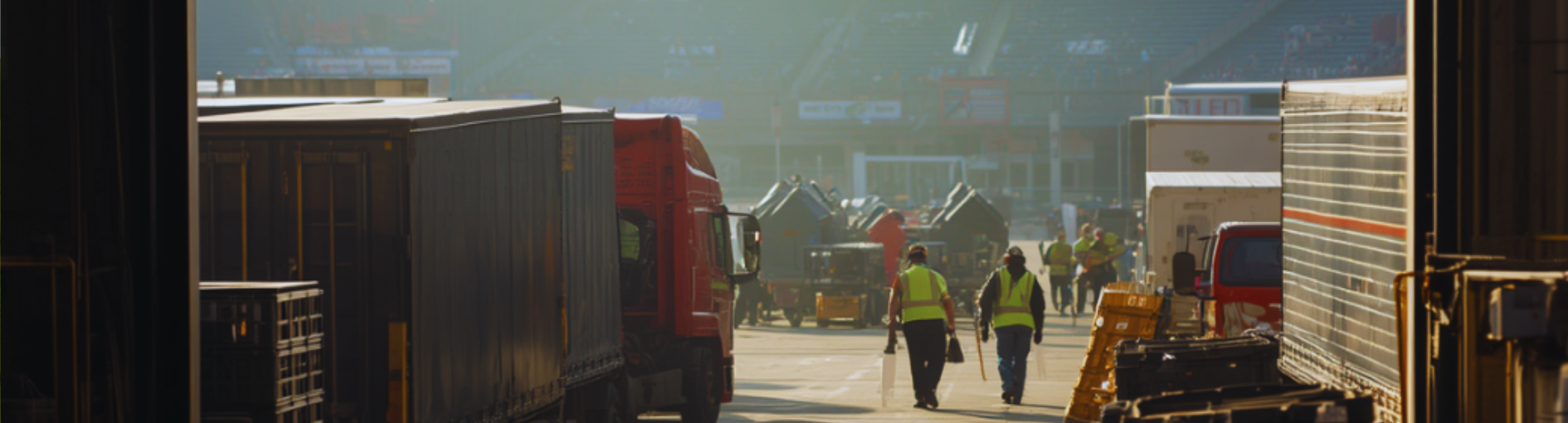
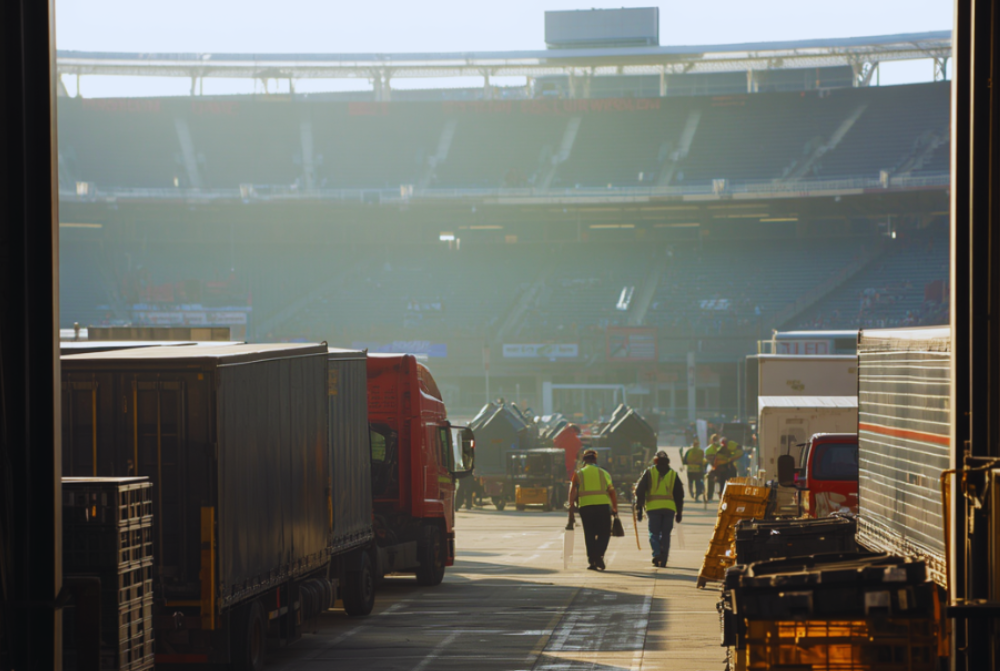
When a stadium is booked to host a World Cup match, or opening night is locked in months out, the first whistle doesn't wait for the build to catch up. Stadium logistics management is the work of coordinating deliveries, materials, access, and site activity at a venue. Right now, more venues than ever are doing it against a fixed, immovable date. The 2026 FIFA World Cup across the US and Canada and Mexico, the Victorian Commonwealth Games, a packed run of AFL and NFL fixtures, and major new openings like Christchurch's Te Kaha have turned the calendar into the project manager. The result: teams upgrading live venues, or standing up brand-new ones, with the clock already running.
That's a hard place to operate, and a venue runs it differently than a typical commercial building. Here's what's driving the pressure, where it lands, and what venue teams can put in place before the next big date arrives.
Why are so many stadiums suddenly on a deadline?
Major events and openings are clustering, and each one comes with a date no one can move.
- SoFi Stadium in Los Angeles, California retrofitted to meet FIFA pitch standards ahead of June 2026 matches.
- In Toronto, BMO Field took on $157.9M in World Cup upgrades, with 17,000 added seats, a new pitch, and new hospitality suites, delivered in phases while the venue kept hosting.
- Ballarat's Mars Stadium in Australia has a $150M upgrade tied to the 2026 Commonwealth Games.
- UTAS Stadium in Tasmania, Australia is in mid-redevelopment and will run the 2026 AFL season at reduced capacity while work continues around it.
- And in Christchurch, the $683M One New Zealand Stadium (Te Kaha) opened in March 2026, a brand-new covered arena that had to be event-ready on a fixed opening date.
Whether it's a retrofit or a first opening, the pattern is the same: these aren't quiet, fenced-off building sites. They're venues that have to be ready for fans while contractors, suppliers, and operations crews share the same gates, docks, and back-of-house routes. The build and the event meet at one fixed point.
What makes a stadium different from a normal commercial site?
Control. On a conventional commercial or facility site, suppliers and contractors largely plan their own arrivals, they decide when to turn up to deliver or work based on the schedule. A stadium can't run that way. With events, security, broadcast, catering, and facilities all operating to the minute, the venue directs the traffic: internal teams decide who arrives, when, and where, and suppliers and contractors are slotted into orchestrated windows.
That changes the problem. The challenge isn't getting suppliers to book themselves in. It's giving every department a shared, live view of the docks and loading areas so the venue can prioritize and plan as one. When events, operations, and the build are all competing for the same bays, whoever can see the whole picture controls it.
What happens to operations when the date can't move?
Pressure moves to the parts of the venue no spectator sees: the loading docks, the service roads, the access points. A single delayed delivery can hold up a fit-out crew. Two teams directing different suppliers to the same dock at the same time can block a service road on an event day. When the date is fixed, every clash costs time the schedule doesn't have.
The common failure points are familiar to anyone who runs a venue:
- Departments planning in isolation. Events, facilities, catering, and the build each schedule their own arrivals, with no shared view of the docks.
- Competing demands on the same bays discovered at the dock, not in the plan.
- Last-minute changes are handled over phone and radio, where they don't reach everyone who needs them.
- No clear record of what was delivered, accepted, or still outstanding.
None of these are dramatic on their own. Stacked up across a months-long build into opening week, they're how schedules slip.
How do venues keep deliveries and access under control during a live build?
The teams that cope best do one thing consistently: they give every department a single, live view of the dock and loading schedule. When events, facilities, the build, and catering can all see what's already booked into the bays, the venue can sequence arrivals deliberately, prioritizing what matters most for the next event and directing suppliers to the windows that work.
A few principles hold up under deadline pressure:
- One shared view across every team. Events, facilities, security, and the build plan from the same live dock schedule, not separate spreadsheets, whiteboards, and radios.
- Centrally controlled scheduling. The venue assigns and directs delivery and access windows, so arrivals are orchestrated rather than left to chance, clashes are caught in the plan, not at the gate.
- Real-time changes. When something shifts — and on a live venue, it will — the change reaches every department at once.
- A record that holds up. What arrived, who approved it, what's still outstanding: tracked in one place, not reconstructed after the fact.
The goal isn't more software for its own sake. It's one source of truth for the docks, so the business can prioritize and plan with confidence when the schedule can't flex.
What should venue teams put in place before the next big event?
Start before the deadline is close. The venues under the most strain are usually the ones whose departments coordinated late, once the build was already colliding with operations. Three moves pay off early:
- Map the bottlenecks first. Know which docks, gates, and routes carry the most traffic on an event day. That's where clashes will concentrate.
- Put every department on one dock schedule. Shared visibility is what lets the venue prioritize and direct arrivals instead of reacting to them.
- Plan for change, not perfection. The date won't move, so build coordination that adapts when everything around it does.
FAQ
What is stadium logistics management?
Stadium logistics management is the coordination of deliveries, materials, site access, and operational activity at a venue. At a stadium it's typically centrally controlled: internal departments direct suppliers and contractors to specific, orchestrated windows across shared docks, gates, and service routes — especially when a build, upgrade, or new opening is happening alongside live use.
How is logistics at a stadium different from a normal commercial building?
On a conventional commercial site, suppliers and contractors largely plan their own arrivals. A stadium applies far greater control — events, security, broadcast, catering, and facilities all run to tight schedules, so the venue directs who arrives and when. The priority is cross-department visibility of the docks so the business can prioritize and plan, rather than supplier self-scheduling.
How can venues reduce loading dock congestion?
Give every department one live view of the dock schedule, then sequence arrivals deliberately. When events, facilities, and the build can all see what's booked into the bays, the venue can prioritize the most important deliveries and direct the rest to windows that don't clash — instead of teams unknowingly sending suppliers to the same bay at once.
What's the biggest risk when a venue is built or upgraded against a fixed date?
Departments coordinating in isolation. One missed delivery or double-booked dock rarely derails a project on its own. Across a months-long build into opening week, those small clashes — caused by teams planning without a shared view — are what push a fixed-date schedule off track.
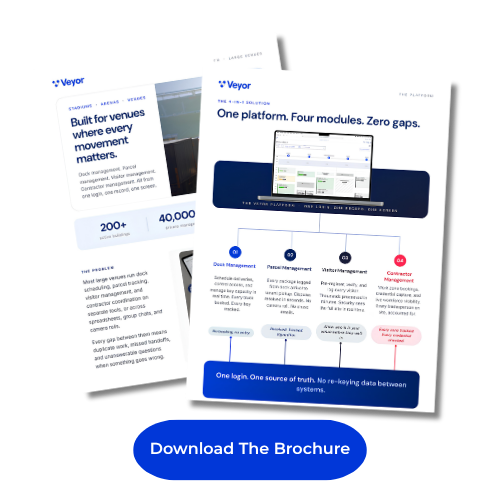
Veyor can support your construction and stadium logistics management needs. Request a demo to see the one shared calendar view.


Get the latest insights into your inbox