Warehouse scheduling software

Turn unpredictable warehouse dock operations into smooth daily flow      

Still dealing with late trucks, yard congestion, and delivery slots that never match the plan? Run appointments, bay assignments, gate management, and yard flow in one warehouse scheduling software built to keep your operations moving smoothly.

Warehouse logistics, without the bottlenecks

When a warehouse or distribution center runs on first-come, first-served, or dock schedules live on whiteboards and spreadsheets, congestion builds quickly and truck dwell time climbs.

Veyor's collaborative platform gives teams a real-time dock scheduling system where carriers can book appointments, share live ETAs, and receive a clear door assignment. With dock scheduling and yard management software keeping everything coordinated from gate to dock, trucks and product keep moving in the right direction.

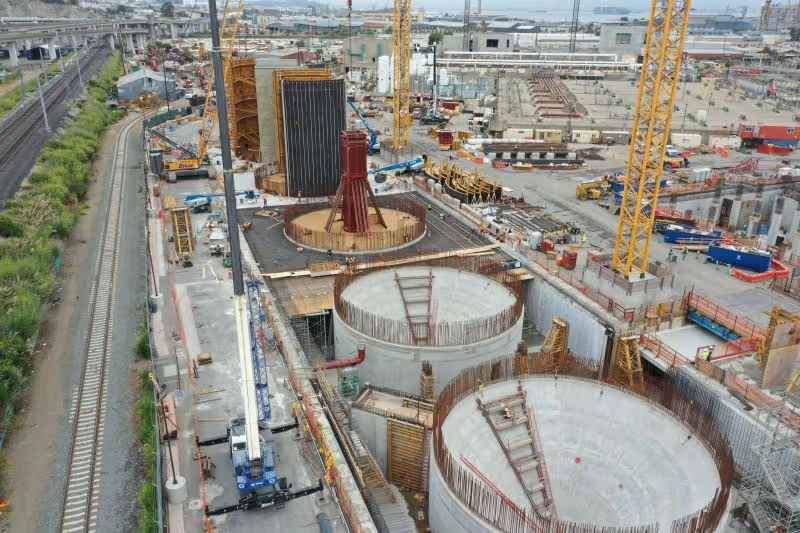
Construction logistics

for your site

From ground-up distribution center builds to phased warehouse expansions, construction activity brings complex delivery schedules, shared access points, and high-value material movements that can't afford to go unmanaged.

Veyor coordinates construction deliveries, bookings, and controlled site access in one connected system - so new builds stay on schedule, upgrades don't disrupt throughput, and every contractor, vehicle, and material movement on site remains visible and accountable.


FEATURES

Warehouse logistics and delivery management for busy facilities

Warehouse dock scheduling software

Manage inbound and outbound dock doors without bottlenecks
Cut dwell times and detention with clearer appointments
Coordinate material movement between warehouses and distribution sites
Schedule internal fleet trucks for pickups with clear routes
Keep arrival and departure times predictable

Yard and vehicle movement management

Guide access to the right bay, loading zone and entry point to reduce congestion
Enforce bay size restrictions based on vehicle type and load
Prevent bottlenecks and misallocation during busy periods
Support specialized areas (cold storage, frozen goods, bulk handling)
Improve warehouse loading dock safety with structured bay assignments
Manage staging areas and truck flow during peak periods
Maintain a full movement record for security teams

Cold storage warehouse management

Meet strict arrival-time and temperature requirements for cold storage freight
Maintain real-time visibility of dock schedules and inbound trucks
Alert incoming drivers to loading requirements and arrival changes
Support ‘just-in-time’ pallet assembly immediately before truck arrival
Prevent temperature-sensitive pallets sitting idle on docks
Reduce double-handling, truck wait times, and quality risk during loading

Gate-to-dock compliance and safety controls

Digitize site rules and pre-arrival requirements
Verify driver, carrier, and load details at check-in
Reduce risky congestion and dock-area confusion
Keep audit-ready records of arrivals, departures, and door assignments
Standardize safe check-in across all carriers
Capture driver, vehicle, and load details

Warehouse access control solutions

Veyor can integrate with License Plate Reader (LPR) cameras, boom gates and security systems to control who enters your dock.
Automatic entry provided for approved drivers once their booking and check-in are complete
Remove manual gate checks with digitized access workflows
Block unplanned or non-compliant vehicles from entering the yard
Keep a verified digital record of every vehicle entering or leaving
Generate blacklists to stop repeat offenders from attending any of your docks

View all
features

Improving site coordination at St Vincent’s
Noah Ruch

Logistics Manager, JFK International Air Terminal
"Having Veyor made it an easy, smooth process - it was pretty seamless"
Chris Salmon, Superintendent, Webcor

Warehouse scheduling software that integrates with your tools

Integrate with your existing systems and keep schedules, workflows, and data consistent across the entire facility.

The proof is in the projects

frequently asked questions (FAQ's)

From common questions to complex ones, straight answers to the questions that matter

How do warehouses reduce congestion and keep dock flow predictable during peak delivery windows?
Busy facilities need more than first-come, first-served receiving. With warehouse dock scheduling software, teams can run structured appointments, assign doors clearly, and keep inbound and outbound traffic moving without bottlenecks. This supports stronger warehouse dock management by reducing dwell time, improving visibility from entry point to dock, and coordinating daily operations across carriers and internal fleets.
Why are warehouse appointment scheduling software tools replacing spreadsheets and phone calls?
Manual dock booking creates delays, missed windows, and yard confusion. With warehouse appointment scheduling software, carriers can book delivery slots in advance, share live ETAs, and receive clear bay assignments. Warehouse teams gain tighter warehouse loading dock management, fewer overstays, and better control of daily throughput across multiple tenants and vendors.
What makes warehouse loading dock solutions critical for safety and compliance?
Modern warehouse loading dock solutions go beyond scheduling. They standardize check-in, reduce risky congestion, and maintain verified records of arrivals, departures, and door assignments. Improving warehouse loading dock safety means structuring bay access, managing staging areas, and consistently enforcing site rules across all carriers.
How do distribution centers manage dock activity across multiple sites and high-volume freight?
High-throughput facilities rely on consistent distribution center dock scheduling to keep freight moving and bays utilized properly. With connected distribution center dock management, teams can prevent misallocation, improve turnaround times, and coordinate material movement across warehouse and distribution networks. Distribution center dock scheduling becomes essential when facilities serve multiple customers, suppliers, and delivery types every day.
How do warehouse access control solutions support heavy vehicle compliance at entry points?
Warehouses need verified entry, not unplanned arrivals. With warehouse access control solutions, facilities can integrate LPR cameras, boom barriers, and security workflows to allow entry only for approved bookings. This helps enforce heavy vehicle compliance by verifying driver, carrier, and load details at check-in, while keeping a digital record of every vehicle entering or leaving.
How do warehouse logistics services improve coordination across carriers, yards, and dock teams?
Effective warehouse logistics services depend on real-time coordination between appointments, yard flow, dock activity, and supplier communication. Veyor connects these workflows into a single platform so teams can reduce delays, keep bays clear, and improve daily execution. With centralized visibility and structured processes, warehouse logistics services become more predictable, accountable, and scalable across busy facilities.
How does warehouse loading dock management improve day-to-day dock control?
Strong warehouse loading dock management keeps appointments, door assignments, and dock activity organized across shifting delivery volume. Teams get clearer visibility into what’s arriving, what’s unloading, and what needs attention before congestion builds.
What’s the difference between warehouse dock management and distribution center dock management?
Warehouse dock management typically focuses on controlling daily receiving and shipping activity at a single facility, including appointments and door assignments. Distribution center dock management is built for higher-volume networks where throughput, turnaround time, and consistent flow across multiple docks and sites matter most.
How does Veyor reduce detention fees?
By enforcing time-slot adherence and recording timestamps, dwell time drops, directly reducing detention costs for carriers and operators alike.
Can Veyor integrate with WMS or ERP systems?
Yes. Veyor supports API integrations and works alongside existing warehouse or yard systems with minimal IT lift
How does Veyor help forecast peak demand?
Leadership gains peak-day analytics, carrier performance metrics, overstay tracking, and arrival pattern insights, replacing anecdotal reporting with real data.
Can Veyor scale across a multi-site network?
Yes. Veyor standardizes dock workflows while providing centralized dashboards across facilities.
How do warehouses reduce congestion and keep dock flow predictable during peak delivery windows?
Busy facilities need more than first-come, first-served receiving. With warehouse dock scheduling software, teams can run structured appointments, assign doors clearly, and keep inbound and outbound traffic moving without bottlenecks. This supports stronger warehouse dock management by reducing dwell time, improving visibility from entry point to dock, and coordinating daily operations across carriers and internal fleets.
Why are warehouse appointment scheduling software tools replacing spreadsheets and phone calls?
Manual dock booking creates delays, missed windows, and yard confusion. With warehouse appointment scheduling software, carriers can book delivery slots in advance, share live ETAs, and receive clear bay assignments. Warehouse teams gain tighter warehouse loading dock management, fewer overstays, and better control of daily throughput across multiple tenants and vendors.
What makes warehouse loading dock solutions critical for safety and compliance?
Modern warehouse loading dock solutions go beyond scheduling. They standardize check-in, reduce risky congestion, and maintain verified records of arrivals, departures, and door assignments. Improving warehouse loading dock safety means structuring bay access, managing staging areas, and consistently enforcing site rules across all carriers.
How do distribution centers manage dock activity across multiple sites and high-volume freight?
High-throughput facilities rely on consistent distribution center dock scheduling to keep freight moving and bays utilized properly. With connected distribution center dock management, teams can prevent misallocation, improve turnaround times, and coordinate material movement across warehouse and distribution networks. Distribution center dock scheduling becomes essential when facilities serve multiple customers, suppliers, and delivery types every day.
How do warehouse access control solutions support heavy vehicle compliance at entry points?
Warehouses need verified entry, not unplanned arrivals. With warehouse access control solutions, facilities can integrate LPR cameras, boom barriers, and security workflows to allow entry only for approved bookings. This helps enforce heavy vehicle compliance by verifying driver, carrier, and load details at check-in, while keeping a digital record of every vehicle entering or leaving.
How do warehouse logistics services improve coordination across carriers, yards, and dock teams?
Effective warehouse logistics services depend on real-time coordination between appointments, yard flow, dock activity, and supplier communication. Veyor connects these workflows into a single platform so teams can reduce delays, keep bays clear, and improve daily execution. With centralized visibility and structured processes, warehouse logistics services become more predictable, accountable, and scalable across busy facilities.
How does warehouse loading dock management improve day-to-day dock control?
Strong warehouse loading dock management keeps appointments, door assignments, and dock activity organized across shifting delivery volume. Teams get clearer visibility into what’s arriving, what’s unloading, and what needs attention before congestion builds.
What’s the difference between warehouse dock management and distribution center dock management?
Warehouse dock management typically focuses on controlling daily receiving and shipping activity at a single facility, including appointments and door assignments. Distribution center dock management is built for higher-volume networks where throughput, turnaround time, and consistent flow across multiple docks and sites matter most.

Bring control to warehouse dock and yard operations

Coordinate appointments, bay assignments, gate access, and yard flow across busy warehouses and distribution centers - where timing, throughput, and safety leave no room for bottlenecks.
Thank you! Your submission has been received!
Oops! Something went wrong while submitting the form.