Loading Dock Security for Commercial Buildings: Managing Vendor Access and Reducing Risk

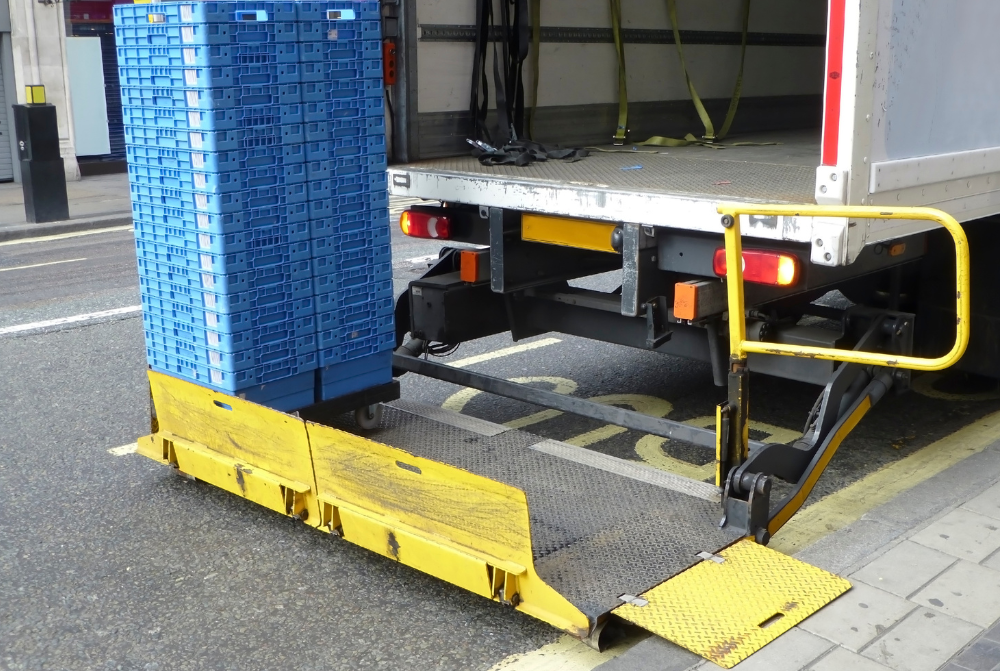
The loading dock is often the weakest security point in a commercial building. Not because security teams aren't paying attention, but because the volume and variety of vendor traffic is too high for manual processes to manage reliably. This article explains the specific risks and the practical steps property managers and security teams can take to close the gap.
Why Is the Loading Dock a Security Risk in Commercial Buildings?
Most commercial buildings have invested significantly in front-of-house security. Access cards, staffed reception desks, visitor management systems that log everyone who walks through the lobby. A visitor registers, is issued a pass, and their presence is documented.
The loading dock often tells a different story. A vehicle arrives. A security guard checks or waves through a driver they may have never seen before, from a company that hasn't been pre-approved, whose credentials haven't been verified against any list. The vehicle parks. People enter the building. None of it is reliably logged.
This gap is the result of applying manual processes to a volume and variety of traffic that manual processes can't reliably manage. The fix isn't more guards — it's a better system.
What Makes Loading Dock Traffic Difficult to Secure?
In a large commercial building, the loading dock receives dozens of vehicles per day from a highly varied mix of suppliers, contractors, and service providers. Unlike the main entrance, where traffic is mostly employees and registered visitors, the dock serves:
- Courier and parcel delivery drivers from multiple carriers, many of whom are subcontractors with no direct relationship to the building
- Suppliers to individual tenants, with whom the building may have no prior relationship
- Fit-out contractors engaged by tenants, often with multiple individuals and variable access requirements
- Facilities and maintenance vendors on recurring schedules
- Waste, cleaning, and utility service providers
Manual verification doesn't scale to this volume. A security guard processing multiple simultaneous arrivals during a peak window cannot reliably check credentials, communicate access rules, log vehicle details, and manage a queue at the same time. The result is inconsistent verification, and inconsistency is the gap that creates risk.
How Do You Build a Vendor Pre-Approval Process for the Loading Dock?
Effective vendor access management starts before a vehicle arrives at the property. The pre-approval layer defines which suppliers are authorized to access the dock, under what conditions, and for which tenants.
- Approved supplier lists give the property team and individual tenants a registry of authorized vendors. A vehicle from a supplier not on the list is flagged and directed to a managed process, not automatically granted access.
- Pre-registration requirements ask vendors to provide vehicle details, including license plate numbers, before their first visit. This enables automated verification on all subsequent arrivals without manual intervention.
- Booking requirements link vendor access to a confirmed delivery window, preventing drop-in arrivals that bypass the access control process entirely.
For regular vendors — daily deliveries, ongoing contractor relationships — registration is a one-time process that enables fast, automated access on every visit that follows. The friction is minimal. The control is consistent.
How Does License Plate Recognition (LPR) Work for Loading Dock Access Control?
At the point of entry, LPR cameras scan arriving vehicles and match their plates against the pre-approved list in real time. Pre-registered vehicles with confirmed bookings are cleared instantly: the gate opens and the vehicle proceeds without any manual intervention. Vehicles not on the approved list are flagged, and an alert is sent to the property team while the vehicle is directed to a holding position.
LPR removes the reliance on security staff to manually check credentials under pressure, particularly important during peak delivery windows when multiple vehicles arrive simultaneously. It also enforces consistency: the same rules apply to every arriving vehicle, every day, regardless of who's on the gate.
For buildings where LPR isn't yet deployed, driver check-in via mobile or kiosk produces a verified, timestamped record of every arrival without requiring staff involvement for routine check-ins.
Why Is Pre-Arrival Communication Part of a Dock Security Strategy?
Vendor non-compliance at the dock is most often not deliberate. Drivers arrive at an unfamiliar property with no information about approved access routes, bay assignments, safety requirements, or building-specific rules. They make decisions based on what seems obvious — and those decisions are frequently wrong.
Pre-arrival communication resolves this before the driver reaches the property. When a booking is confirmed, the system automatically sends the driver their assigned bay, approved access route, safety requirements, and check-in instructions. A driver who arrives with that information behaves differently from one who arrives without it.
Critically, pre-arrival communication is also a documented compliance record. The building can demonstrate that rules were communicated — and when — regardless of what the driver did with that information. In the event of an incident or insurance review, that documentation matters.
How Do You Manage Tenant-Specific Vendor Access in a Multi-Tenanted Building?
In a multi-tenanted building, vendor access isn't a single, uniform policy. A large retail tenant has different approved suppliers, delivery windows, and access requirements than a small professional services office. Without tenant-level coordination, a large tenant's delivery traffic can conflict with a smaller tenant's contractor access, and neither has visibility on the other.
Purpose-built dock management software allows each tenant to manage their own vendor relationships within the building's overall access framework. Tenants can maintain their own approved supplier list, set delivery windows that suit their operations, receive alerts when their vendors check in or overstay, and communicate directly with their suppliers, all without routing everything through property management.
Property management retains oversight of building-wide rules: bay restrictions, vehicle type controls, peak period limits. Tenant-level coordination is delegated to the tenants. Both layers work together, and property staff are no longer in the middle of every tenant-supplier interaction.
Why Is a Verified Activity Log Essential for Loading Dock Security?
Every vendor access event should generate a record: vehicle license plate, arrival and departure time, bay used, associated tenant, and any compliance or overstay events. This record is the foundation of both security accountability and compliance documentation.
For security, it enables investigation. If an incident occurs at or near the loading dock, the activity log identifies which vehicles were present, when, and for how long, without relying on a guard's memory or an incomplete sign-in sheet. For compliance, it demonstrates that access control was operating and that safety rules were communicated, which matters for insurance audits and regulatory review.
A sign-in book doesn't produce this record reliably. A guard's recall doesn't produce it at all. A digital activity log tied to verified vehicle credentials and automated check-in does — automatically, on every arrival.
How Do You Handle Repeat Vendor Non-Compliance at the Loading Dock?
Without a logging system, repeat non-compliance is invisible. The same driver arriving late, using the wrong bay, or ignoring safety requirements on five consecutive visits looks like five unconnected incidents, because there's no record connecting them. Property staff manage each one reactively, and the pattern is never addressed.
With a dock activity log, patterns become visible. A vendor with repeated overstays, route violations, or bay misuse can be flagged. Their future bookings can be subject to additional conditions. Access can be reviewed in consultation with the relevant tenant. The property team's position in any dispute or vendor conversation is supported by documented evidence, not recollection.
→ See how Veyor controls dock access and maintains a verified record of all dock activity — request a demo of our LPR and access control features.
Frequently Asked Questions
What are the main security risks at a commercial loading dock?
The primary risks are: unverified vehicles gaining access without pre-approval, inconsistent manual verification that breaks down during high-volume periods, no documented record of who accessed the dock and when, vendor non-compliance with safety and access rules that goes undetected without a logging system, and the absence of consistent access rules across tenants in multi-tenanted buildings.
How does LPR camera technology work for loading dock access control?
LPR cameras at the dock entrance scan incoming vehicles' license plates and compare them against a pre-approved list in real time. Pre-registered vehicles with confirmed bookings are cleared automatically — no staff intervention needed. Vehicles not on the approved list are flagged and held for manual review. Every scan creates a timestamped record, independent of whether staff were present to observe the arrival.
What should a vendor pre-approval process for a loading dock include?
A vendor pre-approval process should include: an approved supplier registry maintained by property management and individual tenants, vehicle pre-registration with license plate details, a booking requirement that ties access to a confirmed delivery window, and pre-arrival communication of site rules and safety requirements. For contractors and one-time vendors, an induction process that documents the safety briefing before access is granted.
How do you maintain a verified activity record at a commercial loading dock?
A verified activity record requires a digital system that automatically logs every dock access event — arrival time, departure time, vehicle credentials, bay used, associated tenant, and any compliance events — without relying on manual entry. LPR combined with a dock management platform produces this record automatically. The record should be searchable, timestamped, and retained in a format suitable for audit or insurance review.
What happens when a vendor repeatedly violates dock access rules?
With a dock activity log, repeat violations become visible because every event is linked to the same vehicle and driver profile across visits. Property managers can flag the vendor, apply conditions to future bookings, or review access status with the relevant tenant. That position — backed by a documented record — is significantly stronger than managing each incident reactively without any evidence connecting them.
→ See how Veyor manages vendor access and maintains a verified dock activity record by requesting a demo.
.png)




Get the latest insights into your inbox