Loading docks and construction sites have a coordination problem. That's exactly why we built Veyor.


If you've ever managed deliveries on a large construction site or a busy commercial building, you already know what the process usually looks like. Someone's tracking bookings on a whiteboard. There's a group chat that's gotten out of hand. The schedule gets emailed out every morning and is outdated by the time anyone reads it. And somewhere in the middle of all of it, a truck is sitting at the gate waiting for someone to figure out who has priority.
It's not a new problem, and it's not unique to any one site or building. It's just the way things have worked, because until recently, there wasn't a better option.
Veyor was built to change that.
Where it started
Veyor's founder, Richard Fifita, was a civil engineer managing a major high-rise construction project when coordinating the site's cranes and deliveries became his responsibility. The process he inherited was exactly as manual as you'd expect: whiteboards for crane bookings, a separate board in the basement for the dock, a forklift operator fielding calls all day, and a daily photo of the schedule sent to the office to be typed up and emailed out.
The problem with that system (apart from the obvious inefficiency) was that it was static. Construction sites aren't. Every time a booking changed, which was constantly, there was no reliable way to communicate that to everyone who needed to know. The result was trucks arriving at the wrong time, contractors queuing at the same gate, and arguments about who had the slot.
On a large project, any slowdown in materials has a direct impact on productivity. It's not just an inconvenience - delays cost money, and they compound fast.
Richard looked for software that could fix this. Nothing purpose-built existed. The most sophisticated tool available was a Google Sheet.
So he built what he couldn't find.
From construction sites to commercial buildings
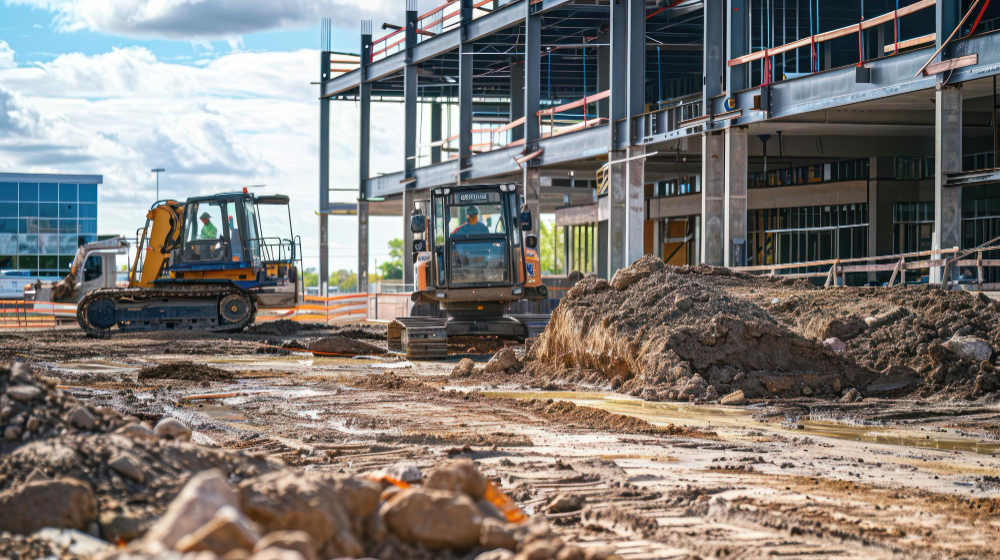
Veyor launched with a focus on construction logistics - crane scheduling, delivery coordination, giving everyone on a busy site a shared, live view of what's happening. But it didn't stay there for long.
As construction projects approached completion and buildings were handed over to their permanent tenants and management teams, those incoming operators wanted to keep using the platform. The building was finished, but the coordination problem wasn't. Loading docks still needed managing, contractors still needed access, and deliveries still needed to be booked and tracked.
That pattern repeated itself enough times that the direction became clear. It started with Lendlease introducing Veyor to JLL on the Melbourne Connect project, and it kept occurring from there. In the US, Clark Construction introduced Veyor to CBRE through the same natural handover. Construction teams already using the platform would finish a building, and the incoming facilities management team would ask to stay on rather than start from scratch. It was a natural transition, and it kept happening.
What Veyor does
Veyor centralizes delivery and logistics coordination across construction sites, loading docks, commercial properties and infrastructure projects. Project managers, superintendents, facilities managers, contractors, and drivers all work from the same live platform - which means bookings are visible to everyone, clashes get caught before they cause problems, and changes are communicated automatically rather than through a chain of phone calls and messages.
The platform covers construction logistics, crane scheduling, loading dock management, driver tracking, and safety compliance. It's designed to be straightforward to use, because a system that requires extensive training doesn't get used properly, and a system that doesn't get used properly doesn't solve anything.
What's next
Following the Series A raise, Veyor is moving from proving the model to scaling it - with a primary focus on the US market, a dedicated push into loading dock and facilities management, and a product roadmap that goes deeper on commercial visibility for construction and real estate teams.
If you're still coordinating deliveries across spreadsheets and group chats, it's worth seeing what a purpose-built platform can do. Book a demo today.

.jpg)


Get the latest insights into your inbox