Top construction Trends Transforming The Industry In 2023


2022 brought many challenges for the construction industry. Although the year kicked off with newfound hope after the pandemic subsided, sudden inflation surges and inevitable interest rate increases affect the growth rate of projects all around Australia. Despite these challenges, the construction industry continues to evolve. Once an industry reliant on pen and paper, it is now starting to embrace new technologies to help improve outcomes in a turbulent post-pandemic economic climate.
Now, as we move well into 2023, here are 4 trends that will lead the construction industry into a more sustainable future.
Green Building
The construction industry is one of the biggest carbon emitters in the world, accounting for 39% of the global carbon emissions. Thanks to the Paris agreement and the ‘Race To Zero’, countries all around the world and more than 1000 cities have started to pass laws and regulations to help meet NetZero by 2050.
Just as the name suggests, countries are racing to meet their ‘Net Zero’ targets which is putting more pressure and responsibility onto business owners to ‘Go Green’. Some countries have already started to sanction businesses for not tracking emissions, and it could cost construction businesses $29 million USD.
In Australia, one of the ways they can do this is to achieve the Green Star rating, a 6 star system developed to rate how sustainable and ‘Green’ a building is. Another step that the country is taking is the new ‘Sustainable Building Policy’ developed by SEPP (State Environmental Planning Policies), and that is expected to commence in October 2023. The policy outlines the new responsibility for businesses to measure and report embodied emissions for all developments and new energy and water standards for large commercial developments.
With all these new developments and the Glasgow Summit taking place in 2026, where country representatives gather to talk about progress towards ‘Net Zero’ plans, the construction industry is sure to change rapidly.
Smart Cities
Recently, with the rise of technology and social media, it seems like smart cities are becoming more and more popular. From electric cars that drive themselves to face recognition doors that open without a key, technology is being seamlessly integrated into every part of our lives.
But how does it affect the construction sector?
As the demand for smarter and greener buildings grows, new infrastructure will be needed, increasing the pipeline of opportunity for the construction sector. However, it will only be those businesses that understand and use technology that will be able to triumph. And with the structures led by technology becoming the standard, construction companies will start to look more like technology businesses. They will have to embrace the collaboration between builders and data science companies if they want to stay at the top.
Working Remotely
In 2023, businesses are still facing the challenge of staff shortages. Because of this, businesses will be forced to accelerate digital business transformation plans to adapt to a post-COVID-19 world that involves higher adoption of remote working capabilities.
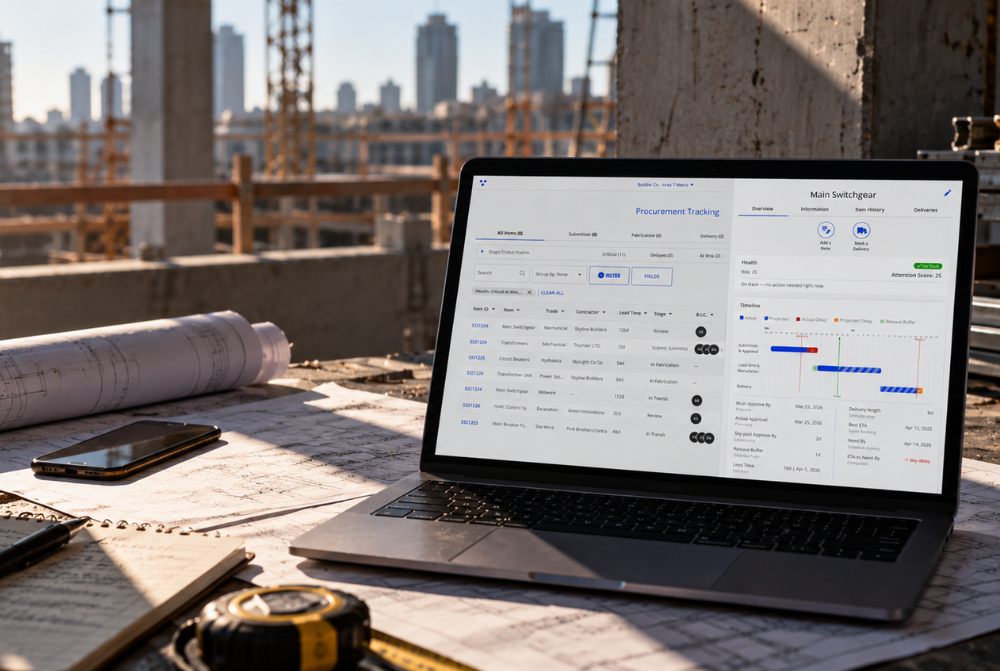
Working remotely while in construction seems like an oxymoron. And to a certain extent, it is. But, thanks to the pandemic, for better or for worse, businesses were forced to shift their models to embrace working from home. With the help of a Construction Logistics Software like Veyor, companies like Lendlease and Built have found a great way of working while off-site. With the app, teams are able to manage the site’s logistics from anywhere, anytime, reducing the need for crowded meetings and on-site scheduling.
Tech and Digitalisation
Data has become one of the most valuable resources on Earth, and with good reason. In 2023, businesses that leverage connected job sites and data collection to their advantage are the ones who will stay ahead of the game. Two great examples of this are BIM, a well known planning software and Veyor, the rising star of logistics systems.
BIM
BIM is one of the programs everyone is talking about, and with good reason. The software allows businesses to model entire cities and structures to help them foresee any mistakes or errors that could potentially happen. Using the metaverse to its advantage, the software is changing the way structures and cities are being built.
Veyor Digital
Veyor has risen to popularity lately thanks to its user-friendly design and short adoption time. It has lead revolution of contech in the post-pandemic construction world. The platform allows sites to easily schedule deliveries and manage resources on site through any device. Additionally, by helping construction companies to gather logistics data, the Construction Site Logistics Software allows site managers to run their sites more efficiently and stay productive.
Conclusion
As the leading Construction Logistics Management Software provider, Veyor sees a range of opportunities for the sector to grow and prepare for the expected expansion of construction activities in the near future.
While technology and digitisation start to shape the sector, the construction industry has the chance to embrace the changes and keep evolving. Although the forecast for the industry in 2023 is less than ideal, technology adoption will help the sector push forward during the expected low activity times.


Get the latest insights into your inbox