Heavy Vehicle Compliance Just Got Real: What the New TfNSW Standard Means for Construction Sites Australia wide


Whether you’re coordinating trucks on a civil site or managing deliveries to a high-rise build, stricter heavy vehicle compliance requirements have recently been mandated and digital systems are the only way to keep up.
As of 26 August 2025, Transport for NSW’s (TfNSW) new Minimum Requirements for Contractor Vehicles came into effect, and the same policy will be rolling out shortly across Victoria and other Australian states. This isn’t another policy update. It’s a reset. And it changes how every construction site manages vehicles, drivers, and logistics, starting with NSW and VIC government projects first.
So, what’s actually changed?
The TfNSW contractor vehicle standard brings together one set of consistent vehicle and driver safety requirements for all contractors delivering to NSW government sites.
It’s built around CLOCS-A (Construction Logistics and Community Safety – Australia), a national framework designed to make heavy vehicle movements around construction sites safer and more transparent.
The requirements were introduced to enhance safety around vulnerable road users (VRUs), shifting the responsibility from drivers to contractors by making sure that they are well-equipped to navigate construction zones and urban environments safely.
Here’s the short version:
- It covers every vehicle and plant item. Light vehicles, heavy vehicles, and on-site machinery are all in scope.
- Heavy vehicles must meet CLOCS-A accreditation. Bronze is the baseline; Silver or Gold levels may be required on higher-risk or urban projects.
- Safety features are mandatory. Reversing alarms, underrun protection, side cameras, and clear signage are now minimum expectations.
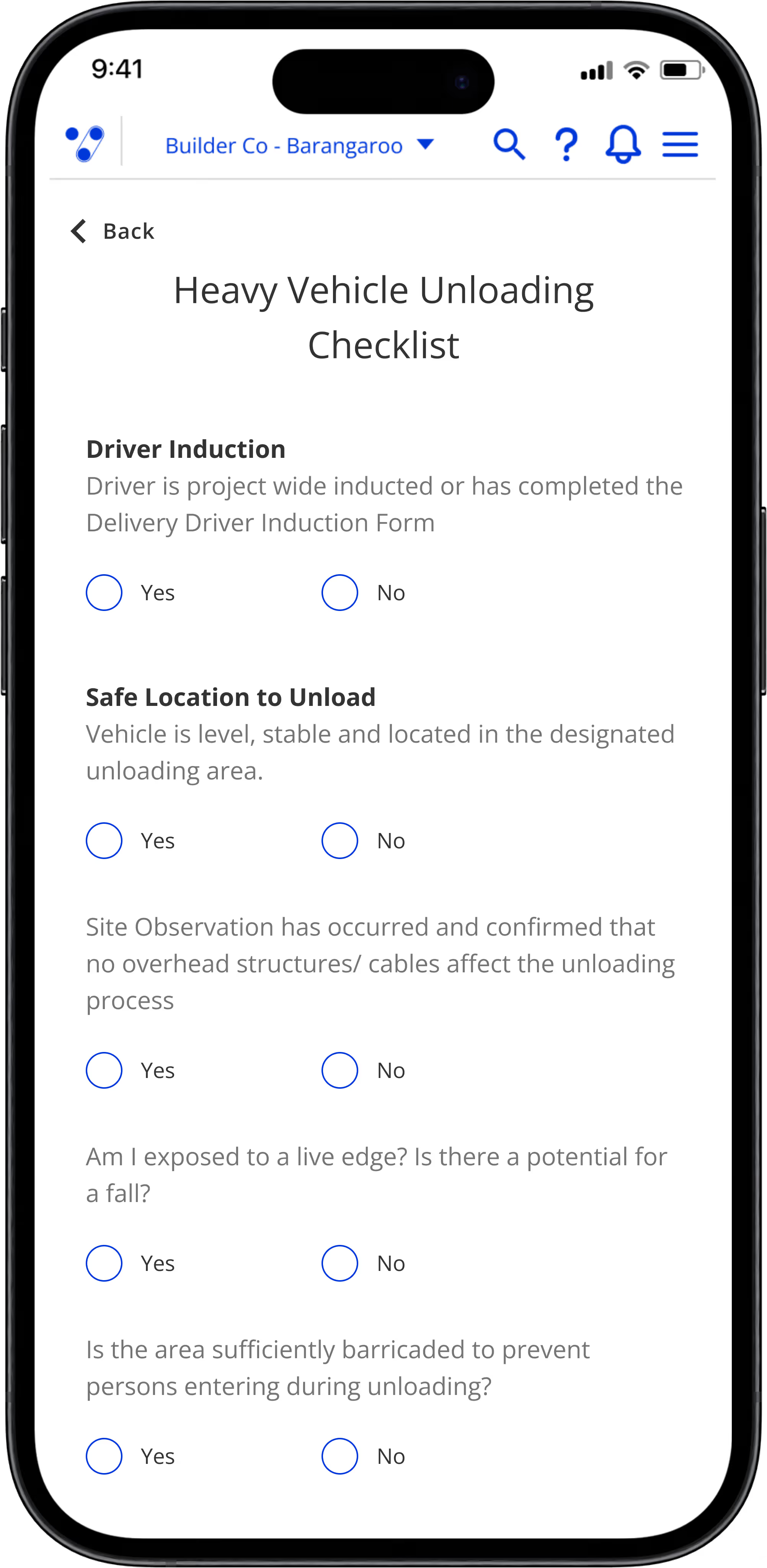
- Driver inductions and verification are essential. You need live, auditable proof of who’s driving, what they’re driving, and that it’s approved for site.
- Compliance is contractual. It’s not a guideline – it’s written into tender and project requirements.
This is about consistency, not red tape. TfNSW now expects digital proof, not paper promises. At Veyor, that’s our bread and butter.
How it connects to what you already know
The Chain of Responsibility (CoR) principle as outlined in the Heavy Vehicle National Law remains the foundation for how the industry defines safety accountability. But TfNSW takes it further.
The new standard extends CoR obligations to all parties involved in planning and managing deliveries. If you influence a delivery, you share responsibility for it. And now, you need the records to prove you are fulfilling your obligations.
This changes your day-to-day, not just your policy binder
This change affects how logistics, scheduling, and site operations are conducted daily. Schedulers, subcontractors, and supervisors all play a role in the chain of responsibility compliance now.
If your process still relies on whiteboards, WhatsApp photos, or paper logs, you’re running a risk. TfNSW expects digital, consistent, and retrievable records, not assumptions.
To stay compliant, you’ll need to:
- Confirm every vehicle meets the relevant CLOCS-A requirements.
- Record inductions, arrivals, and safety checks digitally.
- Maintain clear documentation to prove construction vehicle safety compliance.
- Respond fast to audits or spot checks.
Compliance doesn’t have to slow you down. Digital proof makes it faster, simpler, and more reliable.
The standard, demystified
Here’s the plain-language breakdown:
- CLOCS-A Bronze (the baseline): essential safety kit – mirrors, sensors, beacons, reversing alarms, and signage.
- Silver / Gold (for higher-risk sites): Bronze + advanced driver-assist technology, telematics, and real-time monitoring.
- Light vehicles: 5-star Australasian New Car Assessment Program (ANCAP) rating, reversing aids, and set vehicle age limits.
- Plant: visible alarms, inspection logs, and safety beacons – with all records kept on file.
There’s a lot to track, but that’s the point of digital systems. Let the system do the remembering; your job is to keep the site moving.
Sydney Metro showed what digital compliance looks like in practice
Veyor worked with multiple contractors on the Sydney Metro project, including Lendlease on the Sydney Metro Martin Place project in 2021, well before the new standard came into play.
Our software has always focused on compliance and minimising risk (and paperwork!), with a chain of responsibility software embedded into the layer of our platform. We ensure that every induction, approval, and delivery is tracked automatically and that every record is audit-ready.
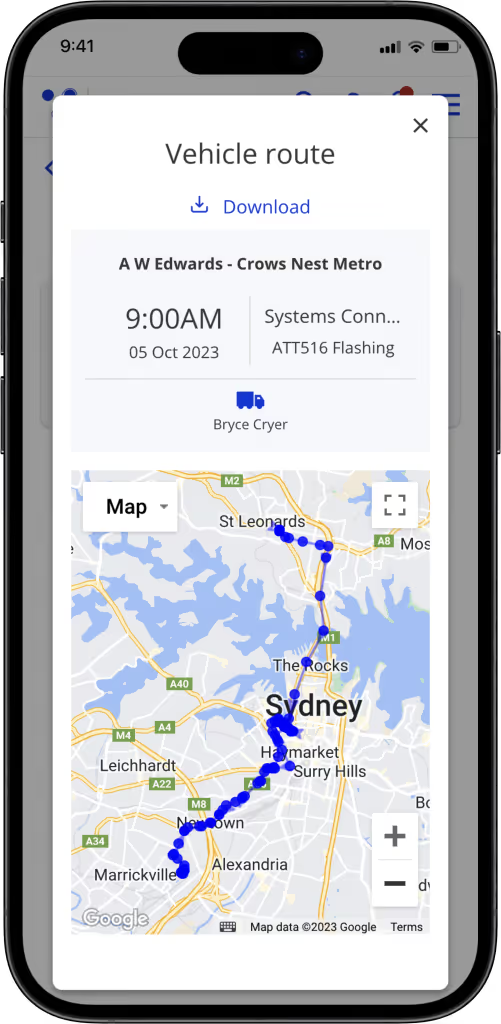
Lendlease used Veyor to manage thousands of daily deliveries, record inductions, and verify driver compliance – all within one live system.
“Veyor helps us ensure that all trucks on the road for this project are compliant with the Sydney Metro Chain of Responsibility standard, which upgrades the trucks to have a level of navigation, tracking and safety features. The app helps us determine whether a truck is compliant and if it has gone through safety checks by the supplier,” says Andrew Smith, SMMP Senior Project Engineer, Lendlease
Every booking, arrival, and offload was tracked and verified in real time, with an auditable record to match.
Sydney Metro showed what’s possible when compliance goes digital.
Here’s how to bring that same efficiency to your sites
- Audit your current process: Who checks what, and where’s that proof stored?
- Digitise the essentials: Paper trails fade. Live systems don’t.
- Train your team: Everyone, from schedulers to site leads, plays a role.
- Standardise once, use everywhere: TfNSW might be first, but the rest of the country is watching.
What's next
The TfNSW contractor vehicle standard isn’t just about compliance. It’s about bringing construction vehicle safety into the digital age. And the rollout is set to be national, with other governments and major contractors (particularly in Victoria and Queensland) already referencing it in tenders.
It’s the next logical step in lifting construction logistics compliance across Australia. And Veyor helps you do it without slowing down.
No paperwork. No panic. Just smarter, compliant logistics that keep your sites moving.
Talk to our team about how Veyor can help you meet CLOCS-A and TfNSW standards and turn compliance into your next competitive edge.
Get the latest insights into your inbox