Managing High-Volume Deliveries on a Data Center Construction Site
.png)
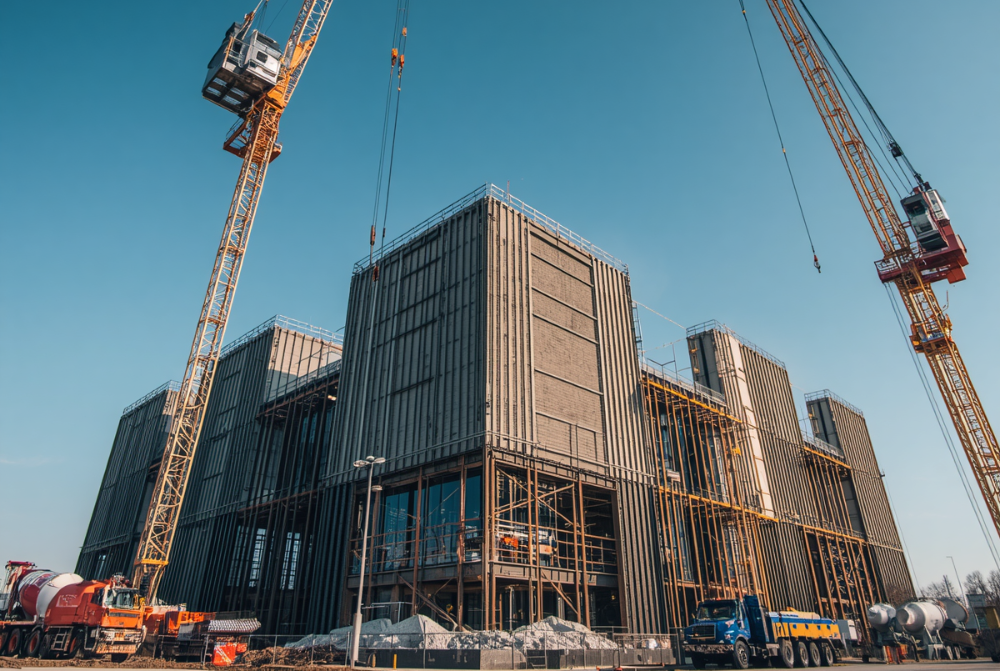
Scheduling deliveries on a data center construction site means keeping dozens of subcontractors, hundreds of truck movements, and a tight daily window from turning into gridlock at the gate. When it works, work keeps moving. When it doesn't, everyone pays — in waiting time, in rescheduled lifts, in calls that shouldn't need to happen.
This post covers the specific delivery challenges that come with large data center builds and how a purpose-built delivery management system helps site teams stay ahead of them.
The Delivery Problem on Data Center Builds, and Why It Compounds Fast
Data center construction projects run on tight schedules and involve an unusually high density of deliveries. Structural steel, concrete, transformers and electrical switchgear, cooling units, cabling infrastructure, generators, UPS systems, and fit-out materials all need to arrive in sequence, and often in parallel, as different trades work across different parts of the site simultaneously.
The problem isn't that deliveries are hard to manage one at a time. It's what happens when multiple subcontractors book independently, without visibility into each other's schedules.
A concrete truck arrives at the same time as a heavy crane lift is in progress. Two deliveries are booked for the same gate at the same time. A supplier turns up with no prior booking and there's no one free to receive them. A materials delivery sits waiting for 45 minutes because the right crew is occupied elsewhere.
Each of these is a small friction point on its own. Across a build that runs for 18 to 24 months with hundreds of deliveries per week, they compound into significant schedule and cost risk.
The answer isn't more staff at the gate. It's a delivery management system that gives every stakeholder visibility before the truck leaves the depot.
How Does a Construction Delivery Booking System Work?
A construction delivery booking system gives subcontractors and suppliers a self-serve portal to schedule their own delivery slots. Instead of calling the site office, sending emails, or adding to a shared spreadsheet or whiteboard, they log in, pick an available window, and confirm their booking.
The site team sees every booking in a live schedule: what's arriving, when, which gate, which trade. Clash detection flags conflicts automatically. If two deliveries are trying to book the same slot at the same access point, the system catches it before it becomes a problem on site.
For data center builds, this matters more than most. The volume of concurrent trades and the complexity of the delivery sequence mean that the booking system isn't just an administrative convenience, it's how the site team maintains control.
Veyor's platform lets subcontractors and suppliers book their own slots directly. Your team sees every arrival in real time. Fewer calls. No clashes. Every delivery logged from booking to completion.
Why GPS Tracking Changes How You Manage Site Deliveries
Knowing a delivery is booked for 10am is useful. Knowing the truck is 15 minutes away at 9:45am is actionable.
Real-time GPS tracking gives site managers advance notice of arrivals with enough time to make sure the receiving crew is in position, the access point is clear, and any equipment needed is ready. On a large data center site where a delayed concrete pour or a missed equipment delivery has downstream consequences, that 15-minute heads-up is genuinely valuable.
GPS tracking also gives you a complete record of every vehicle movement on and around site. That record matters for Chain of Responsibility compliance and for any incident investigation where you need to reconstruct a timeline.
Veyor tracks every vehicle in real time, from the moment they enter the geofenced area around the site, to the moment they leave. The site team sees it live. The record is stored automatically.
What Is Proof of Delivery in Construction and Why Does It Matter?
Proof of delivery in construction is a digital confirmation that a delivery was completed with a timestamp, location, and record of what was received. It replaces the paper docket that gets lost in a site office, or the verbal confirmation that no one remembers six weeks later.
On a data center build, proof of delivery matters for a few reasons:
Invoice reconciliation. When delivery records are digital and timestamped, reconciling invoices against actual deliveries becomes straightforward. Disputes about what was delivered, when, and by whom are settled by the record, not by memory.
Contractor accountability. With multiple subcontractors and suppliers delivering to site, having a clear record of what arrived and when creates accountability across the supply chain.
Compliance documentation. For sites operating under Chain of Responsibility obligations, proof of delivery is part of the audit trail that demonstrates the site was managed responsibly.
Veyor captures proof of delivery automatically as part of the delivery workflow: no paper, no chasing, no gaps.
How Do You Reduce Delivery Delays on a Large Construction Site?
The most effective way to reduce delivery delays is to shift from reactive management to proactive management. That means:
- Booking slots in advance, not on the day
- Giving subcontractors visibility into available windows so they self-schedule without bottlenecks
- Using clash detection to catch conflicts before they reach site
- Tracking vehicle ETAs so the site team can prepare for arrivals
- Maintaining a live dashboard so everyone — site manager, logistics coordinator, crane operator — is working from the same information
When all of that runs through a single platform, the coordination overhead drops significantly. The site team spends less time fielding calls and more time managing the work.
FAQ: Construction Delivery Management
How do you manage multiple subcontractor deliveries at once?
A centralized booking system is the foundation. When every subcontractor books through the same platform, the site team has a single live view of everything arriving that day. Clash detection prevents double-booking. GPS tracking gives advance notice of arrivals. The result is a site team that's managing the schedule, not reacting to it.
What is a construction delivery booking system?
A construction delivery booking system is a platform that lets subcontractors and suppliers self-schedule their delivery slots in advance. The site team sees all bookings in a live dashboard, with clash detection to flag conflicts. It replaces manual scheduling methods, such as spreadsheets, phone calls, email chains, with a single coordinated system.
How does GPS tracking work for construction site deliveries?
GPS tracking works by fitting a geofence around the site and tracking each vehicle's location in real time as it enters the zone. Site managers see live vehicle positions and ETAs on a dashboard. Every movement is automatically logged, creating a complete record of site access for compliance and incident management purposes.
What is proof of delivery in construction?
Proof of delivery in construction is a digital record confirming that a delivery was received, including timestamp, location, and delivery details. It replaces paper dockets and verbal confirmations, and is used for invoice reconciliation, contractor accountability, and Chain of Responsibility compliance documentation.
How do you reduce delivery delays on a large data center construction site?
Reduce delays by moving from ad-hoc to advance scheduling, using a booking system with clash detection, and tracking vehicle ETAs so the site team can prepare for arrivals. When subcontractors self-schedule into available windows and the site team has a live view of the day's deliveries, most of the common friction points — gate congestion, missed windows, unannounced arrivals — are eliminated before they happen.
..............................
See how Veyor handles high-volume delivery scheduling on data center builds. [Book a demo →]
..............................




Get the latest insights into your inbox