Data Centers Are 2026's Biggest Build, and Its Toughest Logistics Test

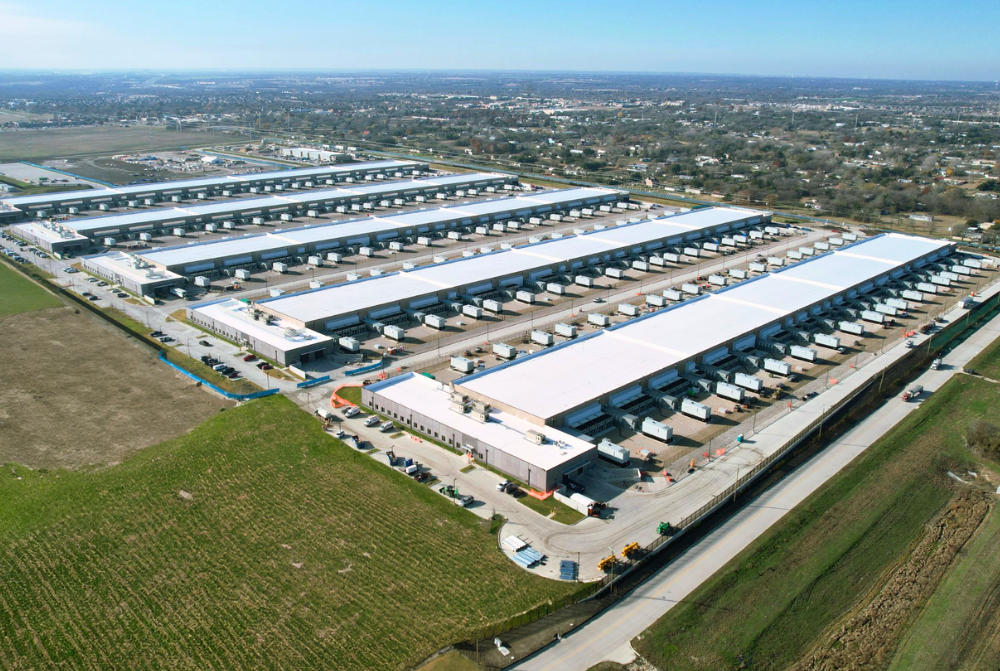
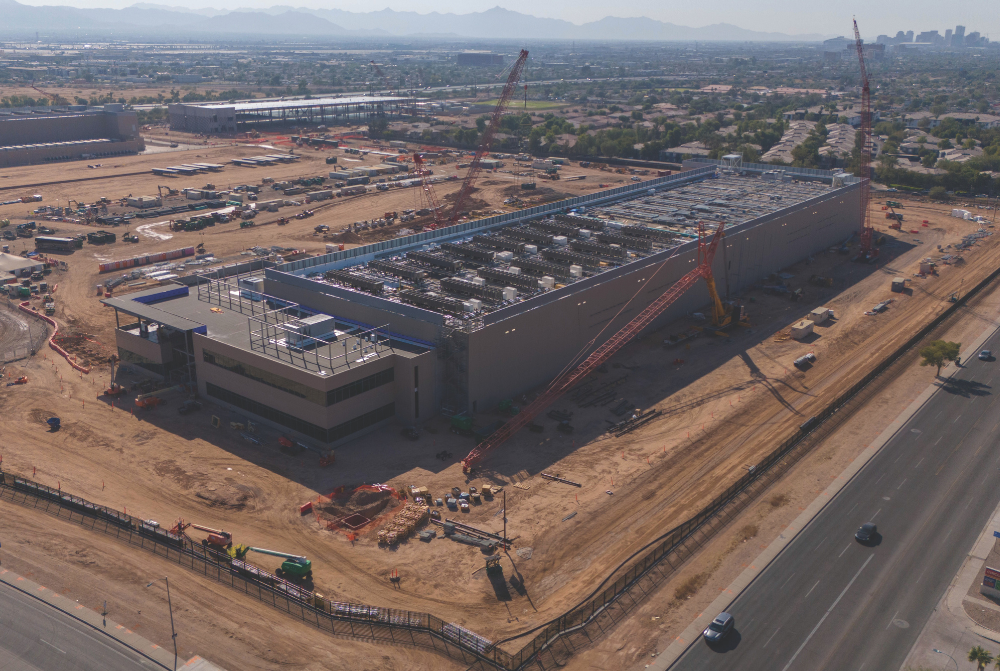
Data center construction is the fastest-growing build type in the world right now, and it's exposing a logistics problem most construction teams have never had to solve at this scale. More data centers are breaking ground in more countries, on tighter schedules, than at any point in the industry's history. The projects making headlines this year — a $10 billion campus in Indiana, a proposed 1.2-gigawatt facility outside Sydney, a $1.7 billion build in rural Saskatchewan — are also some of the hardest sites in construction to keep on schedule. They concentrate more deliveries, bigger equipment, and tighter deadlines into a smaller footprint than almost any other build type. The contractors winning these projects are the ones treating delivery sequencing as its own discipline, not an afterthought bolted onto the schedule.
How Big Is the 2026 Data Center Construction Boom?
In the US, ConstructConnect is currently tracking 76 data center projects worth more than $88 billion set to break ground in the next six months alone. That’s on top of a 2025 that already saw data center construction starts jump 190% year-over-year to $77.7 billion. Data centers are not a niche trend inside the construction industry. It's reshaping where general contractors, crane operators, and heavy-haul carriers are putting their capacity.
Which Countries Are Building the Most Data Centers Right Now?
The boom isn't confined to one market. Right now data center construction is showing up on four continents at once, and at a scale that makes individual projects newsworthy in their own right.
In the United States, Meta broke ground in February 2026 on a $10 billion, 13-building campus in Lebanon, Indiana — 10 data center buildings plus a network building, a logistics warehouse, and an administration building, spread across 1,437 acres. At peak, it will support more than 4,000 construction jobs, with the first buildings expected online by the end of 2027. A few states south, Vantage Data Centers is building "Frontier" in Shackelford County, Texas — a $25 billion, 1.4-gigawatt campus on 1,200 acres that will employ more than 5,000 people across construction and operations, with its first building due in the second half of 2026.
In Australia, a proposed 1.2-gigawatt campus on Mamre Road in Kemps Creek, New South Wales, would be the first data center in the country to pass the 1-gigawatt mark. The AU$5 billion project broke ground in early 2026, constructing six four-story buildings expected to create roughly 500 construction jobs .
In Canada, Bell is building a C$1.7 billion, 300-megawatt data center in the Rural Municipality of Sherwood, Saskatchewan, near Regina, as part of its national "AI Fabric" network. Bird Construction is leading the build, which is expected to generate 800 temporary construction jobs, with the first data halls entering service in 2027.
And in Malaysia, the state of Johor, which is just across the border from Singapore, has become one of the fastest-growing data center markets in the Asia-Pacific region, with capacity projected to more than double by the end of 2026 as hyperscalers look for sites close to Singapore's demand without Singapore's constraints.
Why Is a Data Center Build a Harder Logistics Problem Than a Typical Commercial Site?
Data centers aren't structured like standard commercial builds, and that changes what "logistics" has to mean on site.
The equipment is the first difference. Generators, switchgear, transformers, and cooling plant arrive as massive, single-item deliveries that need a specific bay, a specific crew, and a specific window. There's no absorbing a missed delivery into "we'll get to it tomorrow." The schedule is the second. Hyperscale clients attach real financial penalties to time-to-power delays, so the pressure to keep every delivery moving is constant. And the site itself is the third: multiple contractors and trades are often competing for the same access points and the same lay-down space, on a compressed timeline that leaves little room to absorb a clash.
Power, water, and site-access constraints are tightening around this build type too. Some fast-growing hubs are now capping how much water new data centers can draw for cooling, which is starting to shape where and how these projects can be built — one more variable site teams have to plan around, on top of the delivery schedule itself.
How Is the Construction Labor Shortage Changing Data Center Delivery Schedules?
The US construction industry is short an estimated 439,000 workers as of late 2025, a gap expected to widen toward roughly 499,000 in 2026. Hyperscale data center sites, which can each require 4,000 to 5,000 workers at peak, are competing hardest for the skilled trades still available.
That shortage is a major reason modular and prefabricated construction is accelerating on data center builds. Assembling power rooms, cooling units, and building modules in a factory setting can cut project timelines by 30 to 50%. But modular doesn't remove the logistics problem, it relocates it. Instead of managing trades on site, teams now have to manage the precise, sequenced arrival of large, expensive, hard-to-store prefabricated units, which is its own coordination challenge.
What Does Coordinated Data Center Logistics Actually Look Like?
The sites keeping pace with these schedules share a few habits:
- Delivery windows for oversized loads are booked and confirmed in advance, not arranged by phone call
- Vehicle location and ETA are tracked in real time rather than assumed
- Exclusion zones around live electrical and cooling works are communicated to every driver before they arrive, not discovered at the gate
- High-value equipment arrivals are verified, photographed, and signed off the moment they land, so there's a record if a dispute or delay ever needs to be traced back
None of that is new or different. It's the same discipline good sites have always applied to deliveries — just applied to a build type where the cost of getting it wrong is higher and the schedule is less forgiving.

FAQ: Data Center Construction Logistics in 2026
What is causing the 2026 data center construction boom?
Hyperscale demand for AI infrastructure is driving a global wave of data center construction. In the US alone, ConstructConnect is tracking 76 projects worth more than $88 billion set to start within six months, following a 2025 in which data center construction starts rose 190% year-over-year.
Which countries are seeing the most data center construction growth in 2026?
The United States leads in total project value, with major campuses underway in states including Indiana and Texas. Australia, Canada, and Malaysia are also seeing significant growth, including a proposed 1.2-gigawatt project in New South Wales, Australia, and a rapidly expanding hub in Johor, Malaysia.
Why is data center construction harder to schedule than other commercial builds?
Data centers require massive single-item deliveries — generators, switchgear, cooling plant — that need specific bays and crews, on top of aggressive time-to-power schedules and multiple contractors competing for the same site access. That combination makes delivery sequencing far less forgiving than on a typical commercial project.
How is the construction labor shortage affecting data center projects?
The US construction industry faces an estimated shortage of 439,000 workers, expected to grow in 2026, and hyperscale data center sites can each require 4,000 to 5,000 workers at peak. That shortage is a primary driver behind the shift to modular and prefabricated construction on these projects.
Does modular construction solve data center logistics problems?
No, it shifts them. Modular and prefabricated methods can cut data center construction timelines by 30 to 50%, but they replace on-site trade coordination with the challenge of sequencing large, expensive, prefabricated units to arrive exactly when the crew and crane are ready for them.


Get the latest insights into your inbox