News & updates
Back to all articles

Tired of Playing Blindfolded Tennis?

23.05.2024
3 mins
Share this post

Have you ever tried to play tennis blindfolded? Didn't think so, but that's the analogy a site manager on a busy and logistically tight project recently used when he described managing 30 material deliveries each day.

A recent survey of site teams indicated a heavy reliance on phone calls and text messages between dispatch, coordinators, and the drivers to “guestimate” the arrival time of materials onsite.

Site teams aren’t the only ones experiencing the pain - couriers and drivers also want to complete their jobs as quickly and smoothly as possible. This is made difficult when clear site gate locations are hard to convey down the supply chain and driver’s that could be assigned on the day don't have ready  prescribed site routes and a site contact.  Drivers therefore rely heavily on the Chinese whispers that are required to convey detailed instructions. 
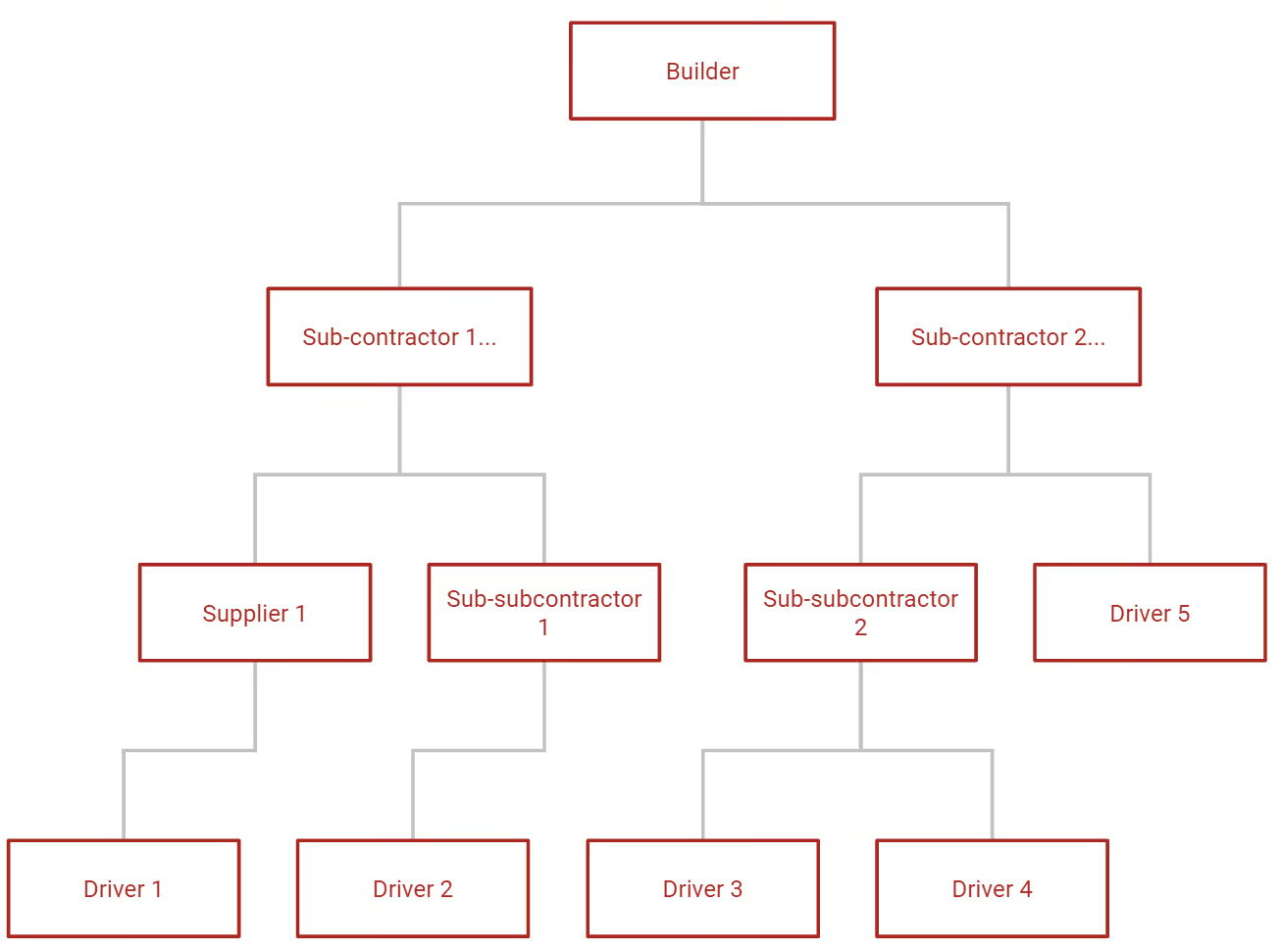
Logistics Coordination of a Construction Site

Not having an accurate ETA or effective way to communicate to your supply chain is a blindfolded tennis match, you might get lucky and the delivery will be on time, most will miss the mark and every so often you’ll get hit with something you weren’t expecting, right where it hurts. 


What’s needed is transparency between the site team, subcontractors, suppliers and drivers. Knowing when and where your deliveries are and having this easily viewable in one screen. Armed with that information site managers can coordinate the workforce and schedule assets for maximum efficiency. 

The impact goes further than just reducing overtime and downtime. When drivers aren’t properly informed of site entry protocol or the correct route, they inevitably create compounding issues like taking routes not approved in the traffic plan. 

Trucks can heavily damage roads, generally due to taking roads that are not designed for their size and weight. Further, complaints from families and commuters are largely due to trucks driving in restricted residential zones. Ultimately the general contractor is impacted by this with fines and the loss of brand reputation even if the trucks were from a subcontractor.

Don’t worry, you can remove the blindfold:

Developed to complement our site scheduling and coordination tool, our Driver Tracking module allows you and your team to view a truck map showing the live location and actual ETAs of your incoming trucks. You can see your supply chain in real time giving you the ability to adjust the schedule and direct your workforce with accuracy. 


Some of the more common use cases: 


Workers know what is coming and exactly when it’ll arrive 

Some downtime is inevitable on construction sites with unexpected weather, issues on the road, plant and equipment breakdowns etc. You can't change the weather but with having an accurate ETA of your deliveries and supply chain you can proactively schedule and coordinate workforces. 

Subcontractors can also now view the live location of their incoming materials and delivery ETA, meaning they aren’t unnecessarily waiting for trucks that have been delayed or stuck in traffic. So if something is running late, work continues on the current task and no one is standing around waiting. 

Reduce congestion - trucks know when to come in 

Limited cranes, hoists and other assets to move materials, as well as limited loading areas, gates and materials laydown area means that trucks waiting around are common and clashes are inevitable.  Having the transparency to see your supply chain in real-time allows you to better coordinate and make decisions on when to let the the plumbers hand unload squeeze in front of the late concrete truck or move that critical KFC delivery ahead of the schedule.

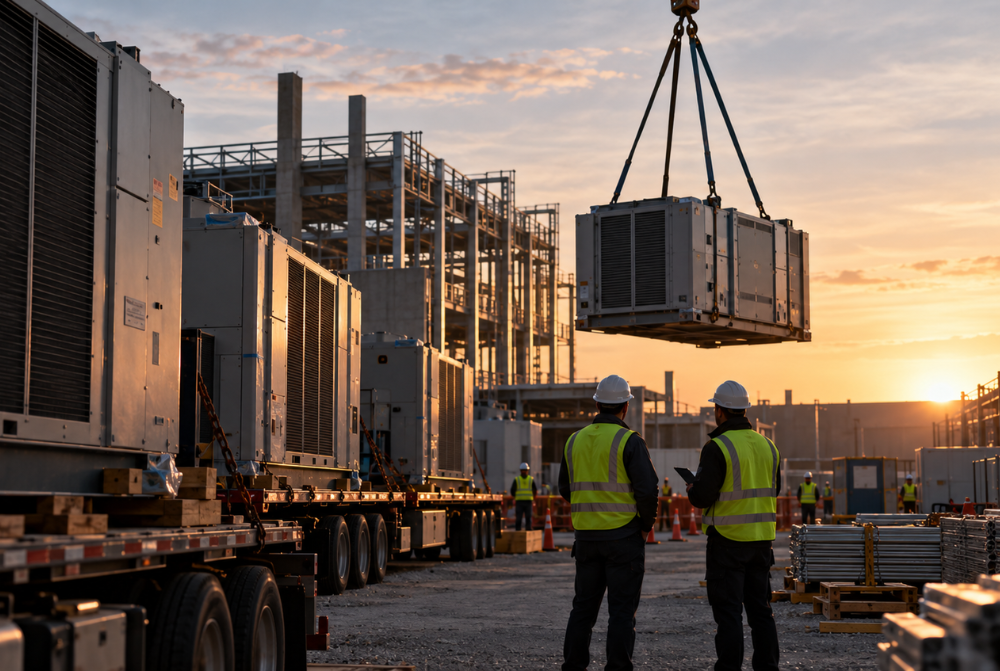
What Are Some Of The Challenges Of Crane Management ?

It being a complex process that requires careful planning, organization, and coordination, there are several challenges that Site Managers or Superintendents face when managing their cranes, such as:

1. Weather Conditions

Changing weather can significantly impact crane operations. High winds, rain, and snow can make it unsafe for cranes to operate, and extreme temperatures can affect the crane's performance. Site Managers or Superintendents need to keep an eye out for any difficult weather conditions and plan ahead for alternatives such as shifting materials using internal lifts or having set areas to store the additional materials when cranes can’t operate. For example, some site teams set up warehousing areas on-site to store surplus materials that helps teams keep busy when there is a slow down in material delivery flow.

2. Site Constraints

Many construction sites have limited space, making it challenging to maneuver cranes around. Careful planning of the crane’s movements needs to be coordinated to avoid any obstacles that could be in its path. Superintendents or Site Managers also need to consider the crane's height and weight limitations to avoid damaging the site's infrastructure. Additionally, the location of the crane, access to unloading zones on roads, and staging areas need to be taken into consideration to ensure that the crane can operate safely and efficiently.

3. Availability of Cranes

Depending on the size and complexity of the project, multiple cranes may be required. Site Managers or Superintendents need to ensure that there are enough cranes available to meet the project's needs and that the cranes are being used effectively to avoid downtime. When this isn’t planned properly at the start of the job, supplementary mobile cranes are often brought in, which come at a high cost.

4. Scheduling Conflicts

Construction projects involve many different subcontractors, each with their own schedules and timelines. Scheduling conflicts can easily arise when multiple teams need to use the crane at the same time, leading to delays and inefficiencies. Good collaboration between all parties involved is essential to ensure that the assets are being used efficiently.

5. Human Error

Crane operators and other on-site personnel need to be trained to operate the crane safely and efficiently. Poor communication, lack of experience, and scheduling clashes can lead to accidents on-site. In order to minimize the risk, Site Managers or Superintendents need to provide proper training and supervision to ensure that everyone on the site is collaborating and communicating. When new high risk activities are undertaken, it is also crucial that site teams perform an appropriate lift study that is audited by all key stakeholders prior to work commencing.


How to Optimize Your Crane Management?

To optimize your crane management, digital comprehensive solutions such as Veyor’s Construction Logistics Management Software are the way to go. Veyor offers a range of features that revolutionizes crane management with just a couple of clicks. Some of the features of Veyor include:

  • Easy crane booking system
  • Collaborative scheduling
  • Real-time notifications about changes and cancellations
  • Tracking of crane usage for actuals and planned data
  • Comprehensive reporting and analytics
  • Visual logistics board


Effective crane management is an essential aspect of construction logistics management. By optimizing crane usage, minimizing downtime, and ensuring safety, construction companies can save money, improve efficiency, and prevent accidents. With a comprehensive solution like Veyor, Site Managers or Superintendents can optimize their crane management and focus on their projects' success.

Get the latest insights into your inbox

Thank you! Your submission has been received!
Oops! Something went wrong while submitting the form.