News & updates
Back to all articles

How to get your crane off the roof?

21.01.2026
3 mins
Share this post

An interesting construction challenge we often get asked about is - how do contractors get the crane off a tower's roof when the build is finished? To answer this, we've run through some key points and used a tricky CBD tower project as a case study.

Site Challenge 

  • During construction, tower cranes are placed external to the building, with the base at the ground level
  • Crane ties are installed on every few floors up the building to stabilize the crane 
  • These ties create gaps in the facade which need to be finished by removing the ties and putting in the final facade panels and finishing internal works
  • A crane is needed on top of the roof to finish the facade and dismantle the external tower cranes which creates an interesting challenge - how do you remove this roof crane once the other cranes have been dismantled? 
  • Tight logistical and engineering requirements always make this process more difficult than it might seem
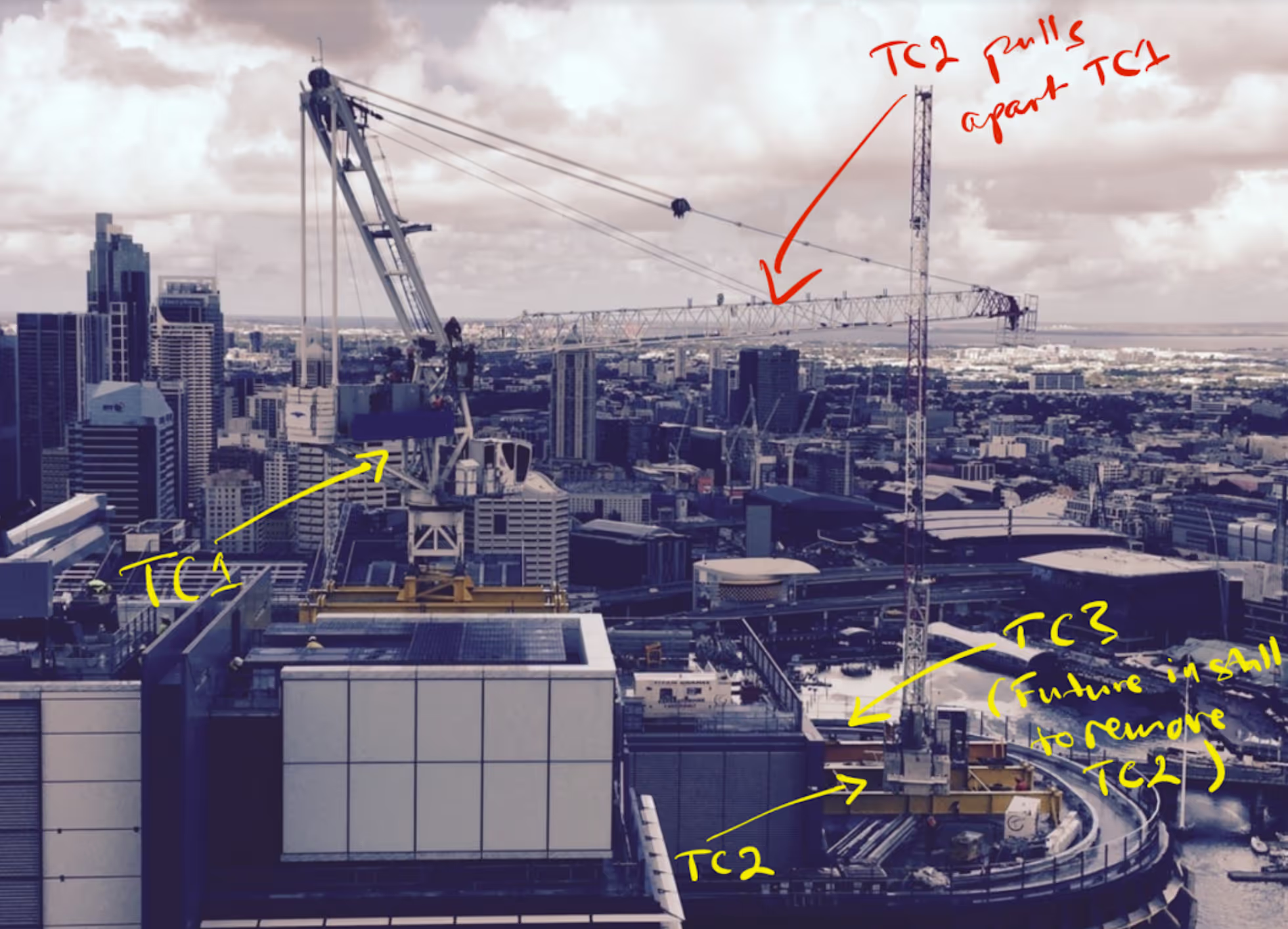
  • The cranes and slabs need to have the right reach and capacity to dismantle each other and there needs to be enough room to manoeuvre the cranes and then pull them apart, piece by piece
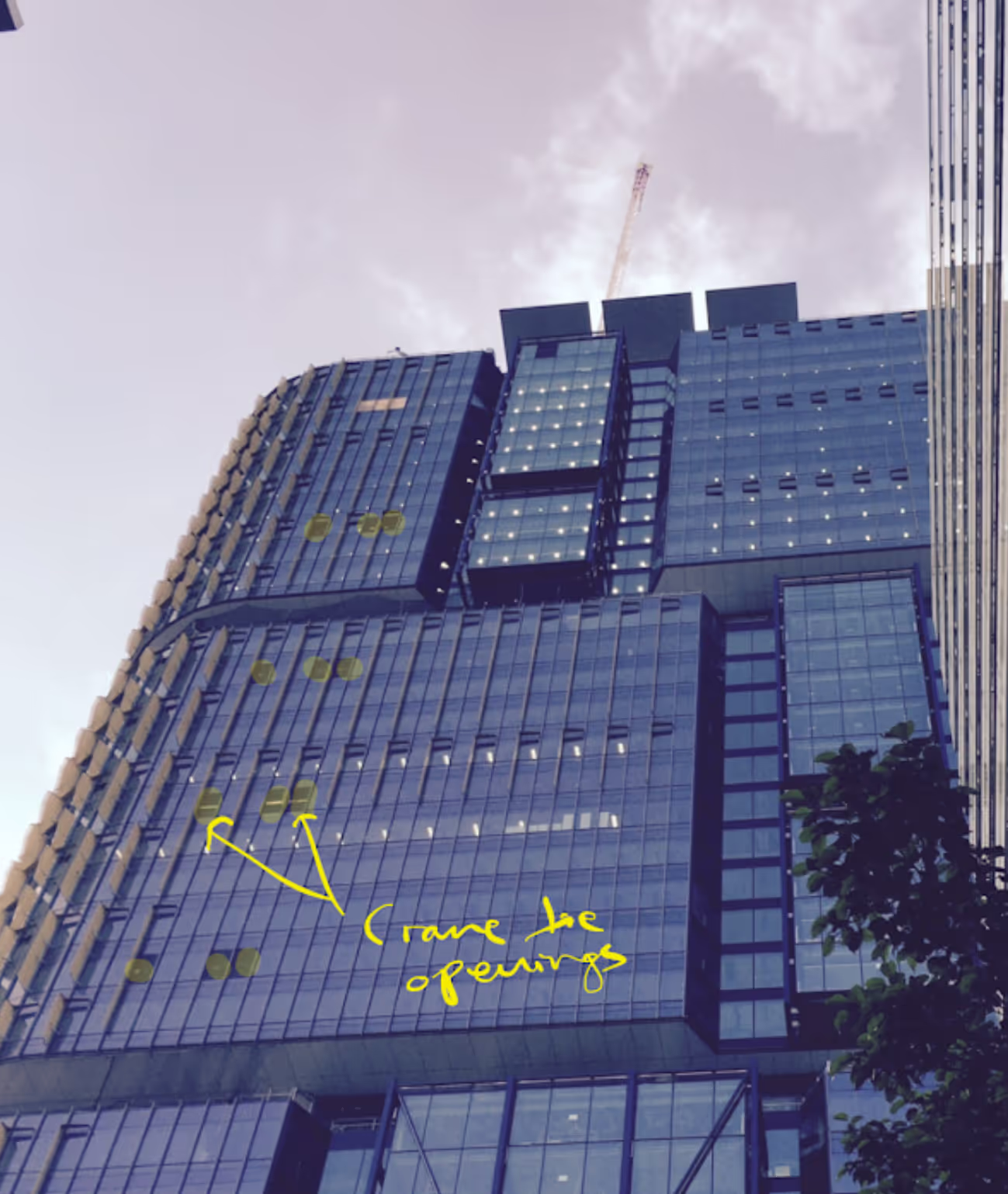
Crane Tie Openings on Tower in Sydney CBD

Risks

  1. If planning, coordinating and scheduling isn’t done perfectly the roof crane could end up being stuck on top of the building - Not good for the site teams' reputation at the pub
  2. If the engineering is incorrect the crane could collapse destroy both the supporting slabs and possibly falling off the building - Not good for the site teams employment 
  3. If the right exclusion zones aren’t used and the teams on-site don’t follow the right safety procedures someone could get seriously injured - Not good, full stop.
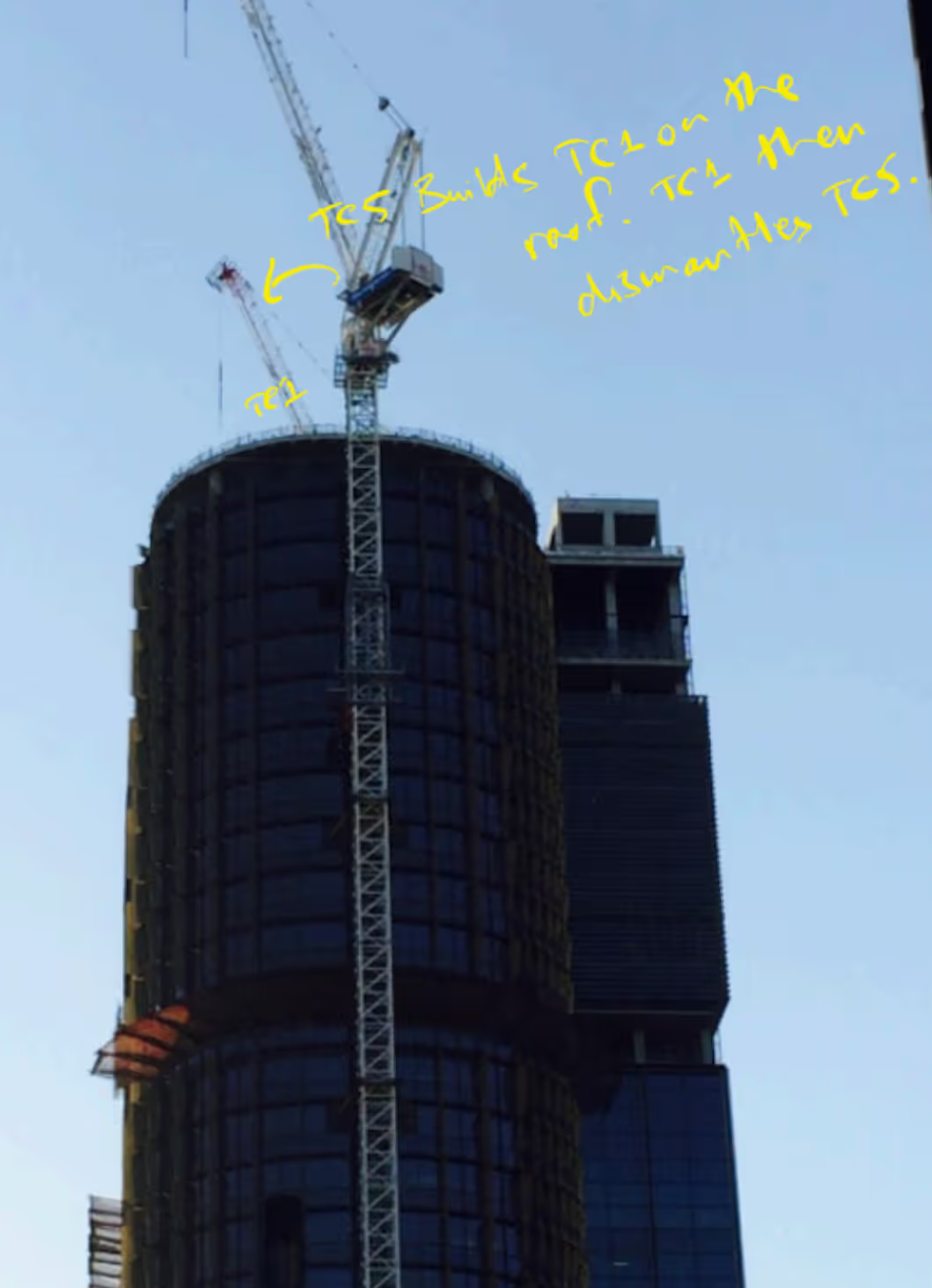
 

Crane on Roof of Tower

The solution - 3 stage recovery crane process

To remove an isolated crane from a high-rise roof, you need to build another slightly smaller crane on the roof next to it, to remove the original larger crane. This process then continues progressively until the last crane installed is small enough to be dismantled on the roof by workers using winches, and then for all components to individually fit down the goods lift;

A key components of planning a crane recovery is:

  • Planning must be done in advance of the structure reaching the top of the roof, as a lot of additional structural strengthening work is often required to put into the slabs and core walls etc;

Design items to consider include; 

  • Picking the right position of the crane - this needs to allow sufficient room for the 2’nd crane to reach all key lifting points as well as needing to be positioned near columns and core walls where there is the greater load capacity;
  • Often, the slabs will need to be further reinforced and have temporary propping support below to accommodate the extra load from the crane;
  • Testing of all cast-ins and pull points is required before installing the cranes. You don’t want to find a weak point after the crane is installed!; 
  • If the crane components overhand the building, clear exclusion zones, and barriers are required, as well as informing road closures to council well in advance.

The final crane is often a Derek crane, which can be built manually and the components are small enough to take up and down in the Goods lift. This now means everything can be taken off the roof, and the tenants don’t have a random crane sculpture on their roof.

Derek Crane on Roof of Tower

What Are Some Of The Challenges Of Crane Management ?

It being a complex process that requires careful planning, organization, and coordination, there are several challenges that Site Managers or Superintendents face when managing their cranes, such as:

1. Weather Conditions

Changing weather can significantly impact crane operations. High winds, rain, and snow can make it unsafe for cranes to operate, and extreme temperatures can affect the crane's performance. Site Managers or Superintendents need to keep an eye out for any difficult weather conditions and plan ahead for alternatives such as shifting materials using internal lifts or having set areas to store the additional materials when cranes can’t operate. For example, some site teams set up warehousing areas on-site to store surplus materials that helps teams keep busy when there is a slow down in material delivery flow.

2. Site Constraints

Many construction sites have limited space, making it challenging to maneuver cranes around. Careful planning of the crane’s movements needs to be coordinated to avoid any obstacles that could be in its path. Superintendents or Site Managers also need to consider the crane's height and weight limitations to avoid damaging the site's infrastructure. Additionally, the location of the crane, access to unloading zones on roads, and staging areas need to be taken into consideration to ensure that the crane can operate safely and efficiently.

3. Availability of Cranes

Depending on the size and complexity of the project, multiple cranes may be required. Site Managers or Superintendents need to ensure that there are enough cranes available to meet the project's needs and that the cranes are being used effectively to avoid downtime. When this isn’t planned properly at the start of the job, supplementary mobile cranes are often brought in, which come at a high cost.

4. Scheduling Conflicts

Construction projects involve many different subcontractors, each with their own schedules and timelines. Scheduling conflicts can easily arise when multiple teams need to use the crane at the same time, leading to delays and inefficiencies. Good collaboration between all parties involved is essential to ensure that the assets are being used efficiently.

5. Human Error

Crane operators and other on-site personnel need to be trained to operate the crane safely and efficiently. Poor communication, lack of experience, and scheduling clashes can lead to accidents on-site. In order to minimize the risk, Site Managers or Superintendents need to provide proper training and supervision to ensure that everyone on the site is collaborating and communicating. When new high risk activities are undertaken, it is also crucial that site teams perform an appropriate lift study that is audited by all key stakeholders prior to work commencing.


How to Optimize Your Crane Management?

To optimize your crane management, digital comprehensive solutions such as Veyor’s Construction Logistics Management Software are the way to go. Veyor offers a range of features that revolutionizes crane management with just a couple of clicks. Some of the features of Veyor include:

  • Easy crane booking system
  • Collaborative scheduling
  • Real-time notifications about changes and cancellations
  • Tracking of crane usage for actuals and planned data
  • Comprehensive reporting and analytics
  • Visual logistics board


Effective crane management is an essential aspect of construction logistics management. By optimizing crane usage, minimizing downtime, and ensuring safety, construction companies can save money, improve efficiency, and prevent accidents. With a comprehensive solution like Veyor, Site Managers or Superintendents can optimize their crane management and focus on their projects' success.

Get the latest insights into your inbox

Thank you! Your submission has been received!
Oops! Something went wrong while submitting the form.