Controlling critical path delays


Construction supply chains are disjointed, complex, and vulnerable to disruption. Due to the dynamic construction environment, supply chain interactions can be far from optimal and miscommunication is a regular occurrence. This leads to wasted time and potential cost blowouts which can impact a project’s overall viability.
When you look at the numbers, the amount of time wasted on-site can be staggering. At an individual level, a recent study from McKinsey found large projects take 20% longer to finish than forecast and are up to 80% over budget. A PMI study found that poor communication is the root cause of projects running over time and over cost. At a project level, the cost of 1-day lost on programme to the builder on a $50m project which runs for 1.5yrs, for example, is approx. $16k. This is based on the range of preliminary costs, salaries, hire equipment, temporary offices etc, accounting for 15% of the total construction cost. Every day the project is delayed, the builder’s costs mount, and if they are in breach of contract, the clients' delay fees also apply. The costs can mount up very fast.
So what are some of the root causes of critical path delays ?
- Companies working in silos (operational boundaries): For a small builder on a small site your teams can probably collaborate, organise and delegate with little to no friction. This is not the case on larger projects where general contractors spread work across multiple subcontractors and suppliers. These suppliers have a head office dispatch with regional warehouses or subcontractors may have a roster organiser in the head office. This means decision-makers are often multiple steps removed from the site and have little to no visibility on the other subcontractors’ movements. Requirements are lost in translation between teams on the ground and HQ as well as lost in translation between different subcontractors.
- Differences in process/ways of work: Companies all have their own ways of working and ways to schedule and order materials to site. Unfortunately, as 90% of work is subcontracted on a typical large job this leads to multiple people on-site being points of contact for different components of the build. This makes it difficult to piece together a comprehensive short term schedule, optimise this schedule in real-time and track progress.
- No source of truth/centralised system: Without one live source of truth for the site, subcontractors and suppliers rely on Chinese whispers to communicate and alter booking times for cranes, loading zones, plant and equipment. This can lead to multiple suppliers turning up and waiting hours to be unloaded or, worse still, being sent away - costing $$$ and delays to the critical path.
It’s clear that for large projects, having clear communication across the supply chain and the ability for seamless collaboration across the trades is necessary to reduce critical path delays. Without an efficient and dynamic communication and collaboration system in place, inevitable delays will compound the risk of delay.
How do you get your site on track?
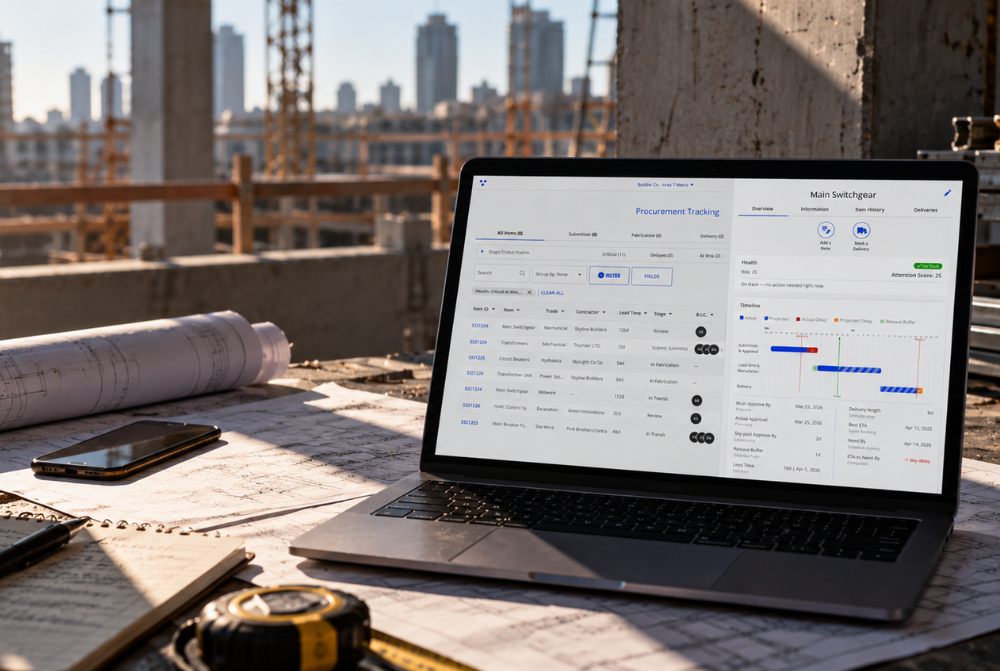
Every construction business will benefit from a world with fewer delays, disputes and distractions. One easy way to achieve this is with live collaborative scheduling. A tool like Veyor will help you achieve a high level of collaboration and coordination on-site, between your supply chain.
Having general contractors site teams, subcontractors and suppliers connected and coordinating on one live digital schedule gives everyone transparency and context of what is happening on-site, even when they aren’t physically on site. Subcontractors then have more context so they can appropriately plan their deliveries and material handling requirements ahead of time, which the site management can easily amend, edit or approve. This forward planning leads to direct savings on-site, but not just in reduced phone calls and meetings. Veyor, in collaboration with the University of NSW, recently validated conducted a study on a CBD tower project and recorded reductions of 49.5% in truck waiting times (for deliveries being unloaded by crane), 45% reduction in trucks waiting longer than 1 hour for crane unloads and a 55% reduction in trucks sent away due to clashes.
With the full supply chain coordinating on one centralised digital schedule, full project data is automatically collected. This gives project teams the ability to track the utilisation of work zones and plant and better understand the progress of the project and the performance of contracted parties - i.e. who keeps turning up late or unscheduled. What this means for you is by using Veyor you’ll have less chance of running over budget, over time and being overly stressed.

Get the latest insights into your inbox