News & updates
Back to all articles

The Rise of Modular Construction & Off-Site Logistics

23.05.2024
2 mins
Share this post

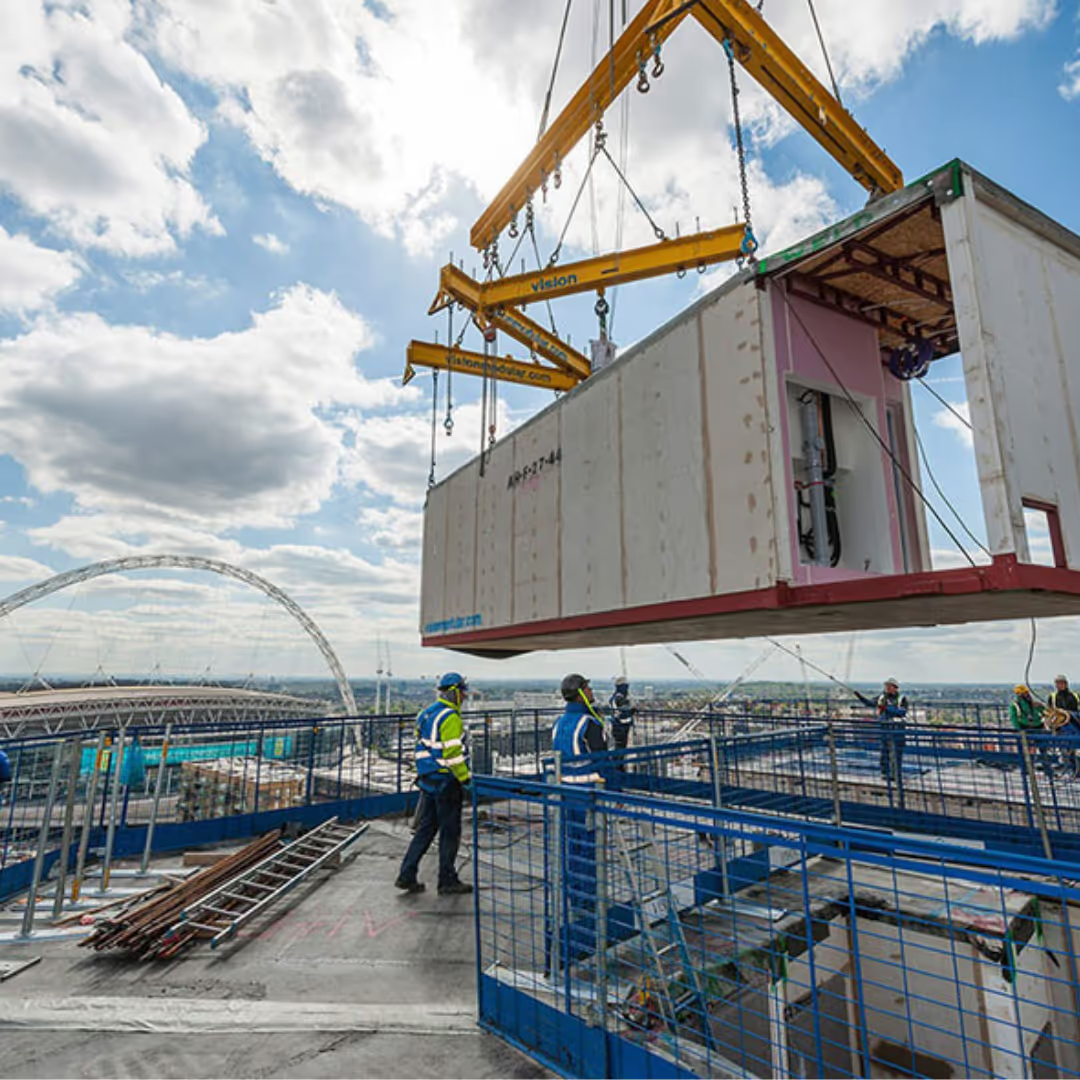
As we’re sure you’ve already heard, modular construction is on the rise. This means stick-built construction is now making way for modular building systems that are utilising modern, prefabrication techniques. 

Modular construction usually takes place in a factory environment and as a result of this, current construction supply chains which have traditionally focused on the delivery of raw materials to sites are now making way for new, more time-critical logistics systems.


How Does Off-Site Construction Work?

Just like traditional construction, off-site construction can’t happen without careful planning, designing, fabricating, transporting and assembling building elements for rapid site assembly.

When it comes to building off-site, modular construction is the most widely used, with up to 95% in some cases, shipped and assembled as 3D volumetric units that are later joined on-site. The modular industry consists of two distinct industry segments: Relocatable Modular and Permanent Modular.  

Relocatable Modular is used for temporary space needs (think job site trailers, temporary classrooms, communication pods and showrooms) and Permanent Modular is more widely used across high rises, government buildings, health-care facilities, schools, hotels etc.


Let’s Talk Off-Site Logistics

Off-site construction is a building process of delivery as much as it is an amalgamation of building products.

As more building is done off-site, the importance of construction logistics continues to grow. For example, the construction program critically relies on each component of the building to be transported and fixed in a strict sequential order. Therefore, effective, streamlined logistics is critical, so that delivery of prefabricated modular components can be pre-planned and then tracked and monitored in line with the program. With a platform like Veyor, we can make this  happen across the entire supply-chain in real time.  


So What are the Benefits?  

There’s some big benefits to off-site construction but there’s some notable disadvantages too. 

If we’re focusing on the thumbs up’s there’s some incredible pro’s as below:

- Shorter construction schedules

- Greater degree of predictability in cost

- Reduced material waste

- Reduced carbon emissions due to transportation to and from site associated with on-site construction

- Reduced site disturbance

- An increase of safety and security of labourers and trade equipment

And if we’re looking at the thumbs’s down here’s what to also note below:

- Structural bulkiness: floor to floor heights and wall thicknesses affected

- Transportation restrictions limit module and panel size

- Spans and configurations of design can be restricted

- Lack of transparency in overhead, profit margin, transport, setting (cranes), and associated increase in designer fees if new to the process

- Flexibility and changeability of structure through future renovations becomes more difficult

All in all when understood and developed by stakeholders intentionally, and with early project planning, off-site construction looks to be a promising new solution to potentially keep project schedules and budgets in check - whilst also increasing quality and reducing environmental impact. 

It’s looking to be particularly effective when used on repetitious or unique projects, with teams that are prepared to embrace the challenges and opportunities associated with it’s delivery.

Reach out to Veyor today to find out more about how we can help you make work happen when it comes to off-site logistics in modular construction.

What Are Some Of The Challenges Of Crane Management ?

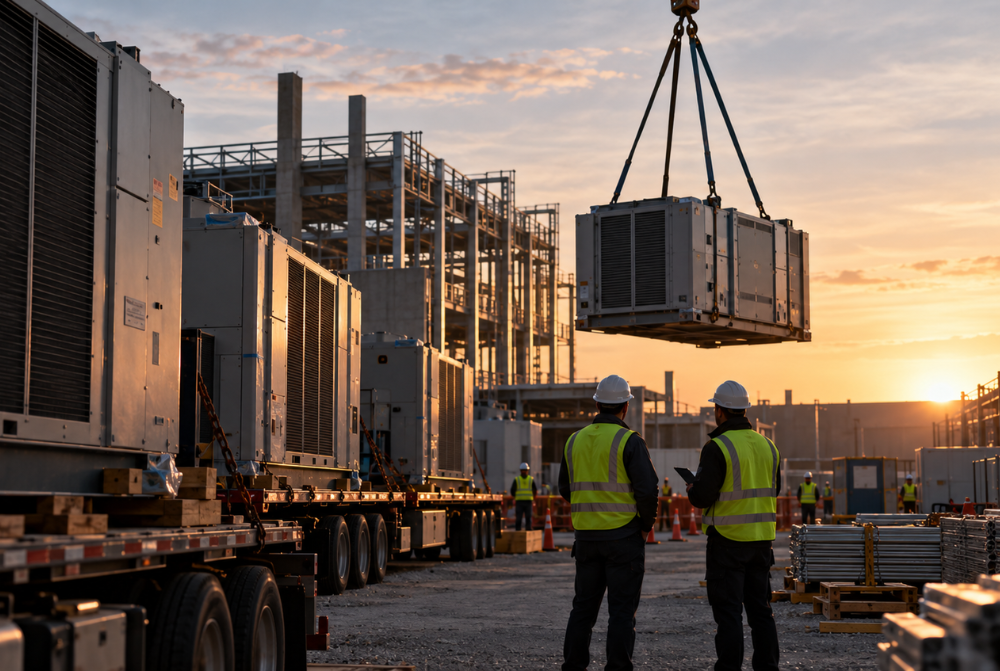
It being a complex process that requires careful planning, organization, and coordination, there are several challenges that Site Managers or Superintendents face when managing their cranes, such as:

1. Weather Conditions

Changing weather can significantly impact crane operations. High winds, rain, and snow can make it unsafe for cranes to operate, and extreme temperatures can affect the crane's performance. Site Managers or Superintendents need to keep an eye out for any difficult weather conditions and plan ahead for alternatives such as shifting materials using internal lifts or having set areas to store the additional materials when cranes can’t operate. For example, some site teams set up warehousing areas on-site to store surplus materials that helps teams keep busy when there is a slow down in material delivery flow.

2. Site Constraints

Many construction sites have limited space, making it challenging to maneuver cranes around. Careful planning of the crane’s movements needs to be coordinated to avoid any obstacles that could be in its path. Superintendents or Site Managers also need to consider the crane's height and weight limitations to avoid damaging the site's infrastructure. Additionally, the location of the crane, access to unloading zones on roads, and staging areas need to be taken into consideration to ensure that the crane can operate safely and efficiently.

3. Availability of Cranes

Depending on the size and complexity of the project, multiple cranes may be required. Site Managers or Superintendents need to ensure that there are enough cranes available to meet the project's needs and that the cranes are being used effectively to avoid downtime. When this isn’t planned properly at the start of the job, supplementary mobile cranes are often brought in, which come at a high cost.

4. Scheduling Conflicts

Construction projects involve many different subcontractors, each with their own schedules and timelines. Scheduling conflicts can easily arise when multiple teams need to use the crane at the same time, leading to delays and inefficiencies. Good collaboration between all parties involved is essential to ensure that the assets are being used efficiently.

5. Human Error

Crane operators and other on-site personnel need to be trained to operate the crane safely and efficiently. Poor communication, lack of experience, and scheduling clashes can lead to accidents on-site. In order to minimize the risk, Site Managers or Superintendents need to provide proper training and supervision to ensure that everyone on the site is collaborating and communicating. When new high risk activities are undertaken, it is also crucial that site teams perform an appropriate lift study that is audited by all key stakeholders prior to work commencing.


How to Optimize Your Crane Management?

To optimize your crane management, digital comprehensive solutions such as Veyor’s Construction Logistics Management Software are the way to go. Veyor offers a range of features that revolutionizes crane management with just a couple of clicks. Some of the features of Veyor include:

  • Easy crane booking system
  • Collaborative scheduling
  • Real-time notifications about changes and cancellations
  • Tracking of crane usage for actuals and planned data
  • Comprehensive reporting and analytics
  • Visual logistics board


Effective crane management is an essential aspect of construction logistics management. By optimizing crane usage, minimizing downtime, and ensuring safety, construction companies can save money, improve efficiency, and prevent accidents. With a comprehensive solution like Veyor, Site Managers or Superintendents can optimize their crane management and focus on their projects' success.

Get the latest insights into your inbox

Thank you! Your submission has been received!
Oops! Something went wrong while submitting the form.