Resource Scheduling Crane and Hoist Time Without Bottlenecks
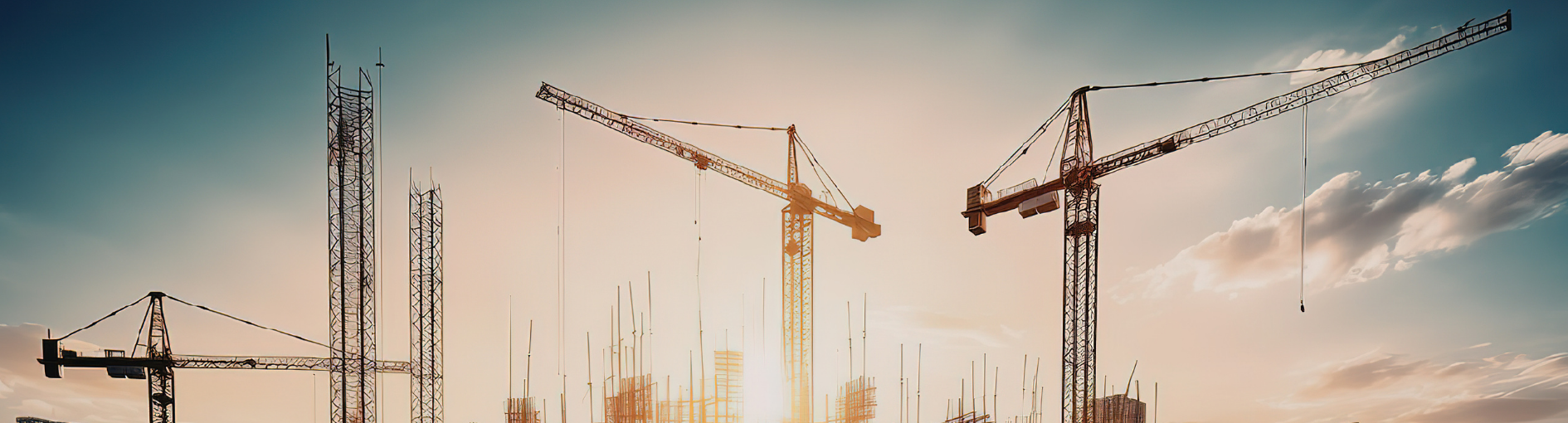

On most high-rise or dense sites, one piece of equipment ends up in the critical path more often than any other: the crane. Everything eventually has to go up through it: steel, concrete forms, mechanical units, curtain wall panels, which makes it the single easiest resource on site to accidentally double-book.
Researchers studying tower crane operations describe this plainly. A 2026 peer-reviewed study in MDPI's Applied Sciences states that as the primary material-handling equipment on construction sites, the tower crane often serves as a critical bottleneck to project progress. This post covers why that happens, what the research shows about fixing it, and what a practical booking workflow looks like.
Why does the crane become the bottleneck?
Because it's a single, shared, sequential resource that every trade needing a lift has to pass through, and visibility into who's booked it, and when, is often worse than for almost any other resource on site.
The MDPI study evaluated a crane-mounted vision system designed to address exactly this kind of coordination failure, specifically the visibility problems that slow down lifts and create near-misses. The results were substantial: the vision system reduced cycle time (the time from hook pickup to placement) by 25%, a statistically significant improvement, alongside fewer near-miss incidents and lower idle time for both workers and operators.
That 25% reduction is a useful data point beyond the specific technology: it quantifies just how much time a crane can lose to poor visibility and coordination alone, before a single mechanical improvement is made.
What happens when a site runs multiple cranes?
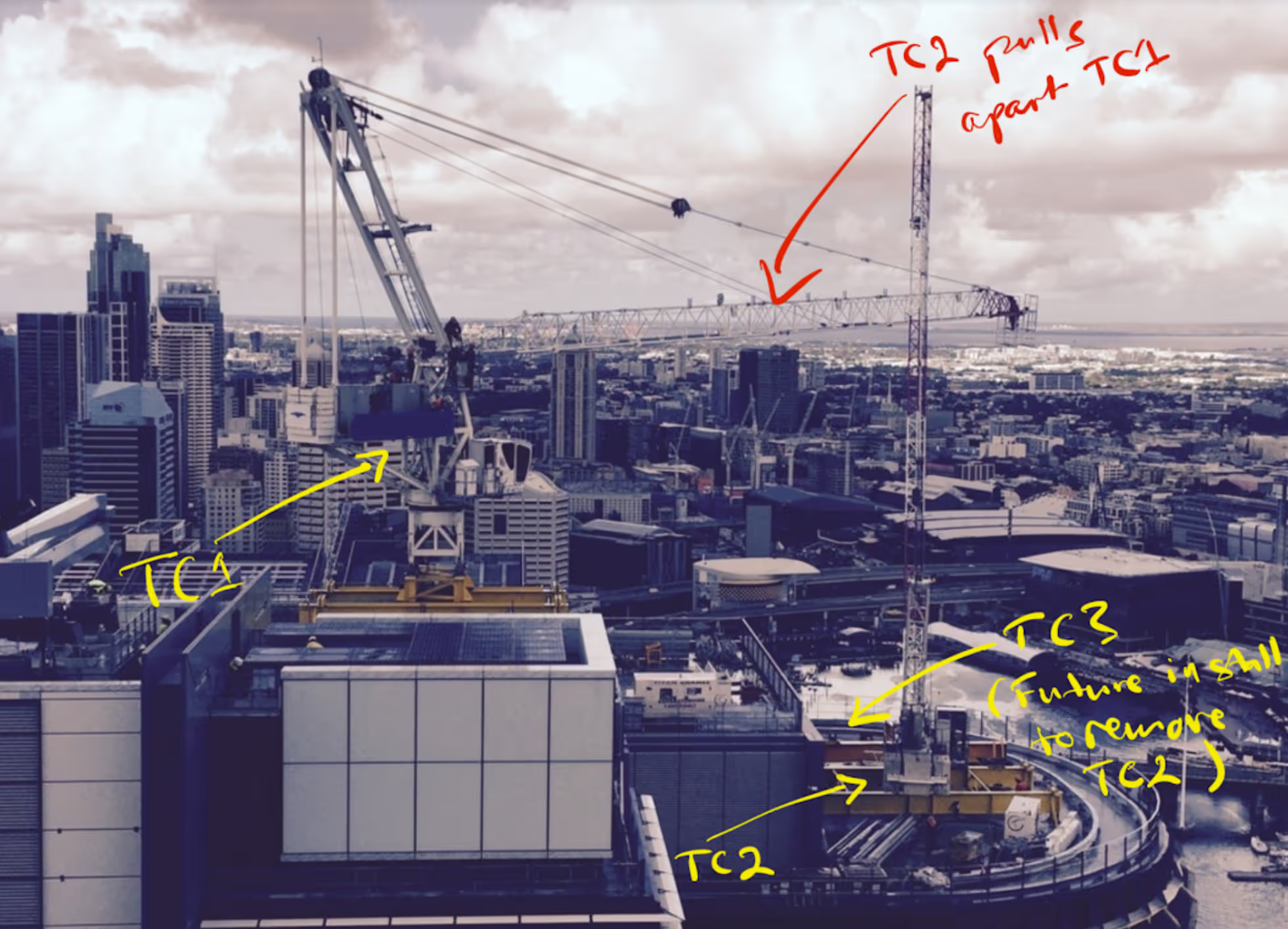
The coordination problem compounds. A 2023 study published in Mathematical Biosciences and Engineering on multi-tower-crane scheduling notes that large-scale projects with overlapping crane coverage areas (the researchers cite examples including Beijing Daxing International Airport) face a genuinely complex scheduling problem: minimizing project duration while avoiding collisions between cranes whose reach areas overlap.
The researchers' proposed solution uses multi-objective optimization to schedule crane tasks in a way that both minimizes overall project time and maximizes the interval between conflicting tasks on overlapping cranes. The underlying point translates directly to any site running more than one crane, even without the optimization algorithm: overlapping crane coverage is a real, quantifiable collision and scheduling risk, not just a theoretical concern.
What does this mean in practice for booking crane time?
A few concrete implications:
- Crane time needs its own booking layer, separate from the general task schedule. A task showing up on the schedule for "Tuesday" doesn't tell you whether the crane is actually free at the specific hour that task needs it.
- Overlapping-reach cranes need the overlap treated as its own restricted zone, not just a shared calendar. A simple time-slot calendar that doesn't account for physical reach can still schedule a collision. Exclusion zones, which block bookings within a defined area of a crane's path, are built for exactly this: mark the overlap between two cranes' working areas as an exclusion zone, and neither crane can be booked into it.
- Visibility failures cost real time, independent of any specific delay. The MDPI research shows a 25% cycle-time improvement from visibility alone, a strong argument that the coordination layer around a crane matters as much as the crane's raw capacity.
- Multiple trades competing for the same crane need a transparent view of what's already booked. Otherwise, the crane becomes a first-come, first-served bottleneck that stacks up delays across every trade waiting on it.
Common mistakes with crane and hoist scheduling
- Scheduling crane-dependent tasks without booking the crane itself. A task's start date on the master schedule doesn't reserve the equipment it depends on.
- Not defining the overlap between multiple cranes' working radii as its own zone. Two cranes with overlapping reach areas can conflict even when their individual schedules look fine in isolation, treating the overlap as an exclusion zone in its own right closes that gap.
- No visibility for trades into what's already booked. Without shared visibility, trades default to showing up and hoping the crane is free — which is exactly how bottlenecks form.
- Treating crane delays as a labor or equipment problem rather than a coordination problem. The research suggests visibility and scheduling, not just raw capacity, drive a large share of crane-related delay.
FAQ
How do you schedule a tower crane on a construction site?
Effectively, crane time should be booked against specific tasks and time windows, separately from the general project schedule, with visibility for every trade needing a lift into what's already reserved.
What is crane cycle time, and why does it matter?
Cycle time is the duration from hook pickup to placement for a single lift. Research shows visibility and coordination improvements alone can meaningfully reduce cycle time, making it a direct lever for overall crane throughput.
How do you avoid crane or hoist bottlenecks on a busy site?
By treating crane time as a bookable, trackable resource with visibility for all trades, and with sites with multiple cranes, marking overlapping working areas as their own exclusion zone, so neither crane can be booked into that shared space, not just tracking each crane's schedule in isolation.
Can multiple subcontractors book crane time directly?
In principle, yes, if there's a shared booking system that shows real-time availability. The alternative, informal coordination through phone calls or a site supervisor, tends to break down once more than a couple of trades are competing for the same equipment.
See how Veyor gives every trade shared visibility into resource crane and hoist scheduling before they conflict


.avif)


Get the latest insights into your inbox