Last Planner System: Where Delivery Coordination Fits


Most construction teams that adopt the Last Planner® System delivery coordination focus on the parts that involve people in a room: pull planning, weekly commitments, the plus/delta review at the end of the week. What gets less attention is the part that determines whether any of that planning actually holds up, whether the materials, equipment, and deliveries a commitment depends on are actually going to show up.
That's not a minor gap. The Lean Construction Institute, which developed LPS, reports that in traditional design and construction projects, only 54% of work planned for a given week is completed within the allotted schedule. A missing delivery is one of the most common, and most preventable, reasons a promise doesn't get kept.
What is the Last Planner System delivery coordination?
The Last Planner System is a production planning and control system built around five connected conversations: should, can, will, did, and learn. Per LCI, pull-planning establishes what should be done; make-ready planning gets the upcoming work into a condition so that it can be done; weekly work planning establishes the specific promises people make for the work that will be done; and the system closes the loop with commitment tracking and weekly learning.
The name comes from who's doing the planning: the "last planners" are the people closest to the work, such as foremen, superintendents, trade leads. They are making commitments they can actually keep, rather than a schedule imposed from above by people who aren't on site to see what's really ready.
Why does follow-through fail without it?
Because in most conventional planning, a task showing up on a schedule is treated as equivalent to a task being ready to execute, and those are very different things. LCI's own data on this is blunt: on average, less than 55% of planned weekly work actually gets completed on schedule. The gap between "planned" and "done" is exactly what LPS exists to close, by forcing an explicit check, during make-ready planning, of whether a task's constraints have actually been cleared before anyone commits to it for the week.
A missing or unconfirmed delivery is one of the most common constraints that gets missed in that check, precisely because it often isn't visible until the crew is standing there waiting for it.
Where does delivery coordination fit into the five conversations?
Specifically in make-ready planning, the "can" conversation. This is the phase where the team looks ahead and asks, for every task coming up: is this actually ready to be promised for next week?
Delivery status belongs in that question alongside labor, drawings, and inspections. A task that needs steel, a crane slot, or a specific piece of equipment isn't ready until that resource is confirmed. Treating delivery and resource bookings as a tracked constraint inside make-ready planning is what turns LPS from a meeting process into an actual predictor of what will get done.
In practice, this means:
- Delivery status gets checked during the lookahead, not discovered when a crew shows up to an empty laydown area
- A delayed delivery is flagged as an unresolved constraint, the same way a missing permit or an unresolved RFI would be
- Weekly commitments only include tasks whose delivery and resource needs are actually confirmed, not tasks that are simply next in sequence
What do the numbers say about how widely this is actually happening?
Not widely enough, even among firms that know about Lean. A 2025 study from Dodge Construction Network and the Lean Construction Institute found that 61% of owners report schedule delays and 49% experience budget overruns on typical projects, yet only 6% of firms describe themselves as deeply engaged in Lean practices, including LPS.
That gap matters here specifically because delivery coordination is one of the more mechanical, software-assisted parts of LPS to implement, it doesn't require the cultural shift that full LPS adoption does, but it captures a meaningful piece of the reliability benefit LPS is built to deliver.
Common mistakes when connecting deliveries to LPS
- Treating make-ready planning as a labor-only check. Confirming crew availability without confirming delivery and resource availability leaves half the constraint picture unchecked.
- Running LPS meetings without live delivery data. If delivery status isn't visible in the room during make-ready planning, the team is guessing rather than confirming.
- Committing to tasks with unresolved delivery constraints. A weekly promise made against a delivery that hasn't been confirmed isn't a real commitment, it's a hope.
- Not tracking delivery-related PPC misses separately. If a missed commitment was actually caused by a late delivery, that needs to be visible in the weekly "learn" conversation — otherwise the same constraint keeps recurring unaddressed.
FAQ
What is the Last Planner System delivery coordination for construction?
The Last Planner System is a lean construction production planning method built around five conversations: should, can, will, did, learn. The conversation shifts scheduling authority to the people closest to the work, aiming to increase the reliability of weekly commitments.
What are the five connected conversations in LPS?
Pull planning (what should be done), make-ready planning (getting work into a condition where it can be done), weekly work planning (promises for what will be done), daily commitment management, and weekly learning review.
Where does delivery or material coordination fit in LPS?
Delivery and resource status is a constraint that should be checked during make-ready planning, alongside labor, drawings, permits, and inspections. A task isn't truly ready to promise for the week if its required delivery hasn't been confirmed.
What is Percent Plan Complete (PPC)?
PPC is the core LPS metric measuring the percentage of weekly planned tasks that were actually completed as promised, commonly used to track whether planning reliability is improving over time.
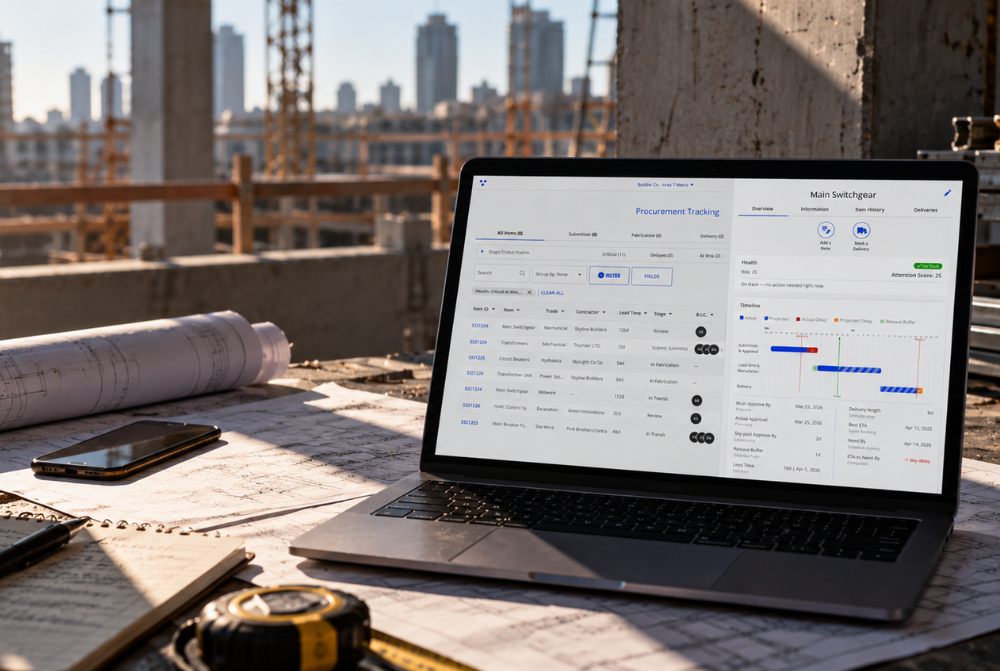
See how Veyor makes delivery and resource status a visible constraint in your make-ready planning.



Get the latest insights into your inbox