Managing a Shared Loading Dock Across Multiple Tenants

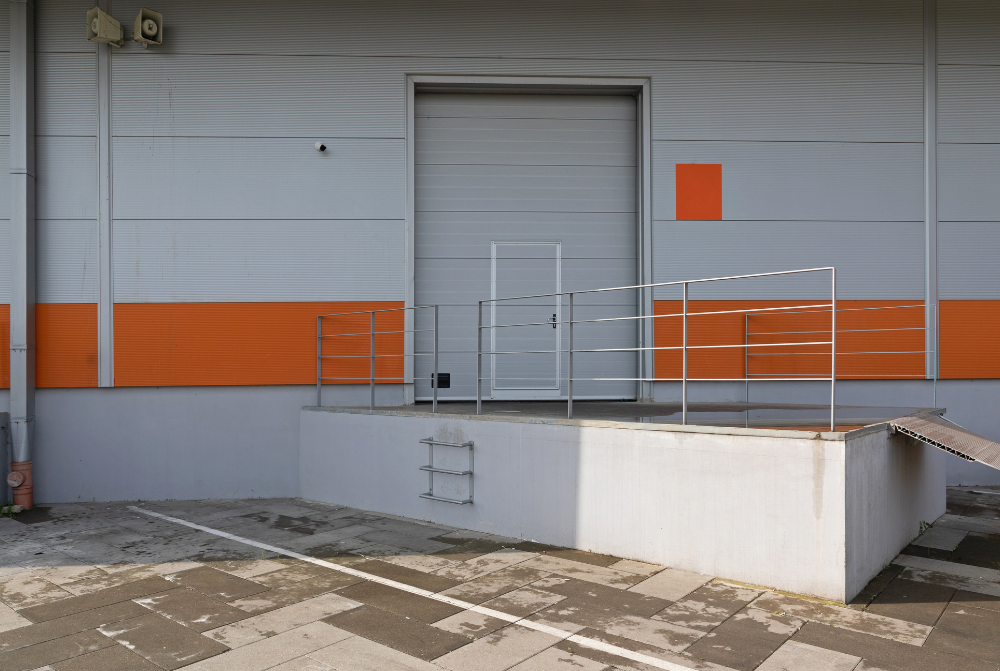
How do you manage a shared loading dock between tenants?
A shared loading dock only works when every tenant is booking against the same schedule. Without that, it works the way an unmanaged dock always does: whoever arrives first gets the space, and everyone else waits, parks somewhere they shouldn't, or calls building management to complain.
The clearest evidence of what happens without coordination comes from a peer-reviewed study of two Singapore retail malls. Dalla Chiara and Cheah (2017) tracked mall loading bays with video, driver surveys, and gate data. The bays were full for about four hours a day on average, adding up to roughly 20 hours of cumulative driver waiting per mall, per day. At one mall, only 31% of delivery vehicles used the loading bay at all. The rest parked in the customer carpark or on-street, exactly the kind of kerbside spillover that ends up as a landlord's problem.
This post covers why shared loading docks are so hard to manage in multi-tenant buildings, what coordinated management looks like, how tenant-level bookings and access control prevent clashes, and what goes wrong when tenants are left to coordinate a shared dock themselves.
Why are shared loading docks so hard to manage in multi-tenant buildings?
A shared loading dock has to serve tenants with completely different delivery profiles from the same limited space. Singapore's Urban Redevelopment Authority notes that supermarkets and department stores are likely to receive about six times the delivery volume of other retail outlets. A loading dock sized for the average tenant will be undersized for the busiest one.
Regulatory minimums don't close that gap either. Singapore's Land Transport Authority requires one loading dock for every 4,000 square meters of shop and supermarket floor area, and sets no loading-dock requirement at all for restaurants. The ratio is fixed when the building is designed, and it takes no account of which tenants will generate the most deliveries.
Other markets set their minimums differently, but none of them plan for day-to-day tenant demand. New York City's zoning code requires no loading berth for the first 8,000 square feet of retail space in most commercial districts, and Toronto uses one loading requirement table for shops and restaurants alike. London and Melbourne have dropped fixed ratios altogether. London asks developments to handle deliveries off the street wherever possible and to submit a Delivery and Servicing Plan, while Melbourne's planning scheme simply requires loading facilities that satisfy the local council. Both approaches judge a dock's adequacy once, when the building is approved, not when trucks start queuing.
What does coordinated multi-tenant dock management look like?
Coordinated management starts with every tenant booking against one shared schedule, rather than each tenant, or each tenant's couriers, treating the dock as a shared but unmanaged resource. Build a buffer between bookings so one late truck doesn't push every arrival after it into a queue.
Landlords and facilities teams get a live view of what's booked and what's arriving. Tenants can see their own deliveries without a call to the building's front desk. And because the schedule is shared, a large tenant's delivery volume no longer crowds out a smaller tenant's slot by default, it's allocated the same way everyone else's is.
How do tenant-level bookings and access control prevent clashes?
Tenant-level booking means each delivery is tied to a specific tenant, time window, and vehicle, not just "the dock, whenever." That solves two problems at once. It prevents one tenant's high-volume delivery schedule from silently crowding out another's, since every booking competes for the same visible slots rather than being negotiated informally. And it gives building security a verified record of who's arriving and for which tenant, which matters in a mixed-use building where contractor access and tenant deliveries are easy to confuse without one.
What goes wrong when tenants self-coordinate a shared dock?
- No single source of truth. If tenants coordinate by phone or email, there's no shared view of what's actually booked, and double-bookings are inevitable.
- Larger tenants crowd out smaller ones. A high-volume tenant, like a supermarket or F&B outlet, can informally dominate dock access simply by having more delivery traffic, unless bookings are structured to prevent it.
- Unmanaged spillover into customer or public space. The Singapore research shows this concretely: when the dock is full and there's no queue system, drivers don't wait, they park somewhere else, often illegally.
- No accountability for who used the dock and when. Without tenant-level booking, there's no record to check when a delivery is late, missing, or disputed between tenants.
Shared loading dock FAQ
How do you manage a shared loading dock between tenants?
By giving every tenant a booking system tied to a shared schedule, so deliveries are allocated by booked time slot rather than first-come access, with a live view for both landlord and tenants.
Who is responsible for the loading dock in a multi-tenant building?
This is typically set out in each tenant's lease, but building management is usually responsible for the shared loading dock infrastructure and scheduling system, while individual tenants are responsible for their own deliveries within it.
How many loading docks does a commercial building need?
There's no single number. Most markets set a minimum when the building is designed, usually tied to floor area. Singapore requires one loading dock per 4,000 square meters of shop and supermarket space, and New York City requires no loading berth for the first 8,000 square feet of retail in most commercial districts. Others, including London and Melbourne, skip fixed ratios and assess servicing case by case at approval. Either way, the minimum is only a starting point. Actual need depends on tenant mix, because some tenants, grocery in particular, generate far more deliveries than others.
How do you stop one tenant's deliveries blocking another's?
Tenant-level booking against a shared schedule is the mechanism, since it makes every tenant's delivery volume visible and allocated, rather than letting whichever tenant has the most traffic informally dominate the dock.
Do I need security for the loading dock of a multi-tenant building?
Yes, in most mixed-use settings, since a shared loading dock is also a shared access point, and verified, logged arrivals reduce the risk of unauthorised access alongside genuine deliveries.
How do I automate a loading dock in a multi-tenant building?
Dock scheduling software that supports tenant-level bookings and access control automates the coordination that's otherwise handled by phone calls and a security desk logbook.
If your tenants are still sorting out dock access by phone and email, we'd like to show you what one shared booking schedule looks like.




Get the latest insights into your inbox